Author: Sheikh Athar

  • Beyond Blue Links: How to Get Cited in Google’s AI Overviews

    Beyond Blue Links: How to Get Cited in Google’s AI Overviews

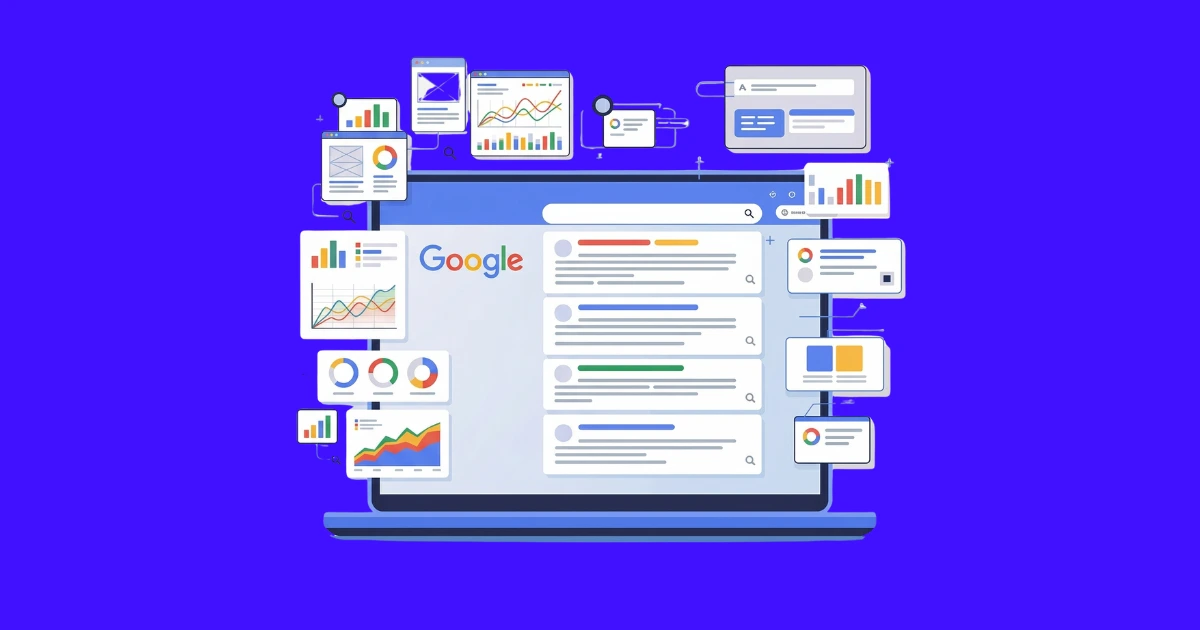
    In 2026, SEO success has shifted from “ranking #1” to becoming a cited source in Google’s AI Overviews (SGE).

    With organic Click-Through Rates (CTR) dropping by up to 61% for informational queries, brands must pivot to Answer Engine Optimization (AEO).

    To get cited, you must lead with direct answers (the BLUF method), implement granular Schema markup, and build “Entity Authority” through ethical link building.

    Sites that earn these AI citations see a 35% increase in organic clicks compared to non-cited competitors on the same SERP.

    The New SEO Frontier: What are AI Citations in 2026?

    What are AI Citations?

    If you feel like the ground is shifting beneath your feet, you’re not alone.

    For two decades, the “Holy Grail” of digital marketing was the #1 spot in the blue links. But as we move through 2026, that spot is no longer the primary driver of traffic.

    Today, Google’s Search Generative Experience (SGE) has transformed the search results page into a conversation. Instead of a list of websites, users are greeted with a synthesized, AI-generated response that answers their questions instantly. Within these responses are small, clickable links known as AI Citations.

    Why should you care? Because the data is staggering.

    According to a September 2025 study by Seer Interactive, organic CTR for informational queries plummeted by 61% once AI Overviews became the norm.

    Even more shocking? Zero-click searches have surged to nearly 70%.

    But here is the “silver lining” for your brand: While traditional clicks are down, AI Search visibility is the new gold rush.

    Being a cited source doesn’t just give you a link but also it gives you a “Verified” stamp of authority from Google’s own AI.

    The Shift from Search to “Answer” Engines

    We are no longer just optimizing for Google, we are practicing Generative Engine Optimization (GEO). The AI isn’t looking for keyword density, it’s looking for answers it can trust.
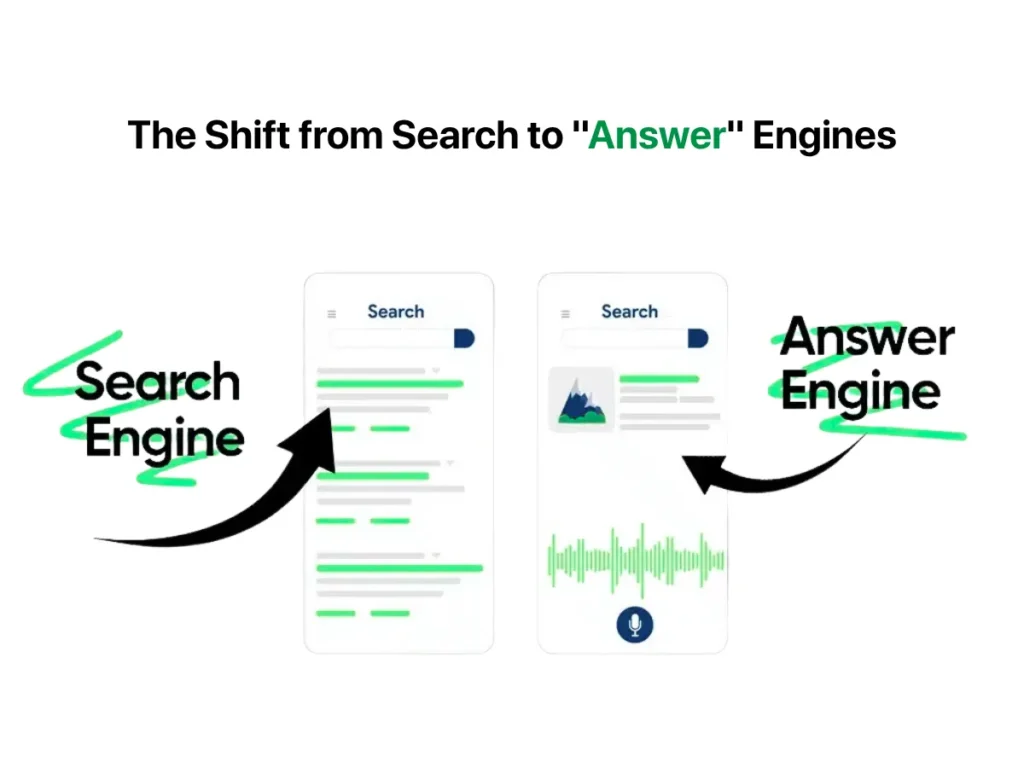
    SEO vs AEO

    If your content is vague or buried under 500 words of “fluff,” the AI will skip right over you and cite your competitor who got straight to the point.

    I hope you’ve got a clear picture of the “what” and “why” behind this shift. It’s a bit of a wake-up call, right? But don’t worry this isn’t the end of SEO, it’s just the evolution of it.

    Now that we understand what we’re up against, let’s move on to the next section and talk about the massive rewards waiting for those who get this right.

    The Big Shift: Why Your Brand Needs to be an “AI-Cited” Source

    You might be thinking, “If clicks are dropping, why am I putting in all this effort?”

    The answer lies in the quality of the visitor.

    In 2026, the “window shopper” who clicks a link and bounces is being replaced by the “informed seeker” who reads the AI summary and clicks your citation to validate a decision.

    The 35% “Citer’s Advantage”

    While the average CTR has dropped, the impact of being cited in Google’s AI Overviews is transformative.

    Data from Search Engine Land indicates that brands appearing as cited sources in an AI Overview capture 35% more organic clicks than those that appear in the traditional results but not the AI box.

    Key Benefits of the Citation-First Strategy:

    • Instant Trust: When Google says, “According to [Your Brand]…”, your credibility triples.
    • Zero-Click Authority: Even if they don’t click today, your brand name is now etched in their mind as the expert. This drives “Branded Search” later on.
    • Voice Search Dominance: Most AI-cited sources are the same ones used by Gemini and Google Assistant for voice responses.

    How to Optimize Content for AI Summaries

    Now that we understand why AI citations are the new “Gold Standard” for digital growth, the question is: How do we actually write for an AI crawler?
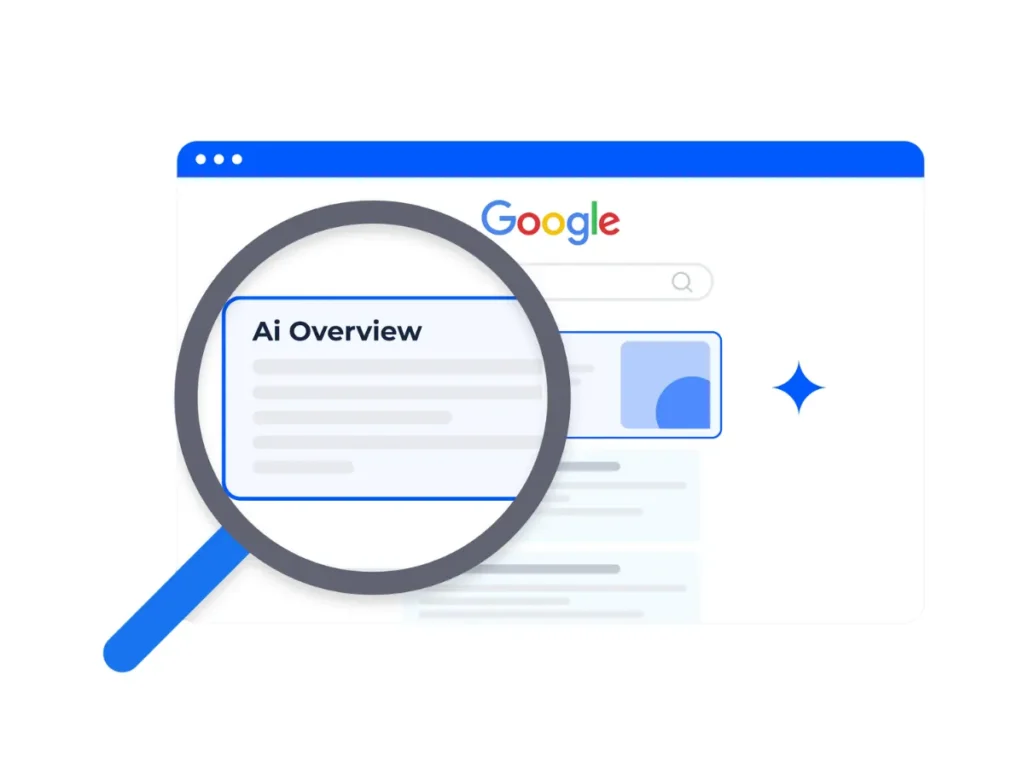
    Optimize content for AI Summaries

    Google’s 2026 algorithm, powered by advanced Natural Language Processing (NLP), has a zero-tolerance policy for “fluff” or “filler” content.

    To succeed in the era of Beyond Blue Links, your writing must be optimized for Answer Engine Optimization (AEO).

    Here is the exact framework to make your content “AI-digestible.”

    The BLUF Method: Lead with the Bottom Line Up Front

    In traditional blogging, we often “bury the lead” by providing background information before giving the answer.
    In the SGE era, this is a fatal mistake. You must use the BLUF (Bottom Line Up Front) method.

    The Rule: Every H2 and H3 section should provide a direct, concise answer in the first 2-3 sentences. Google’s SGE model is designed to “snip” these summaries directly into the citation box.
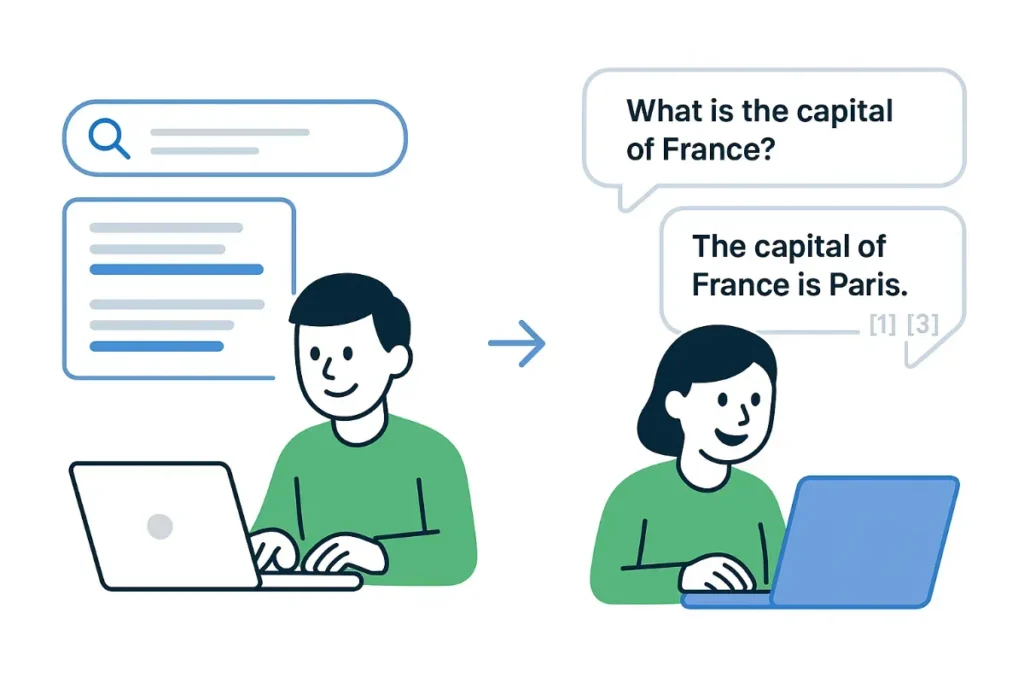
    get direct answers from AI

    If you wander around the point, the AI will simply cite a competitor who was more direct.

    Using Question-Based Headers to Capture “Follow-Up” Queries

    Google’s AI doesn’t just provide one answer, it anticipates the user’s next move. These are known as Suggested Follow-up Queries.
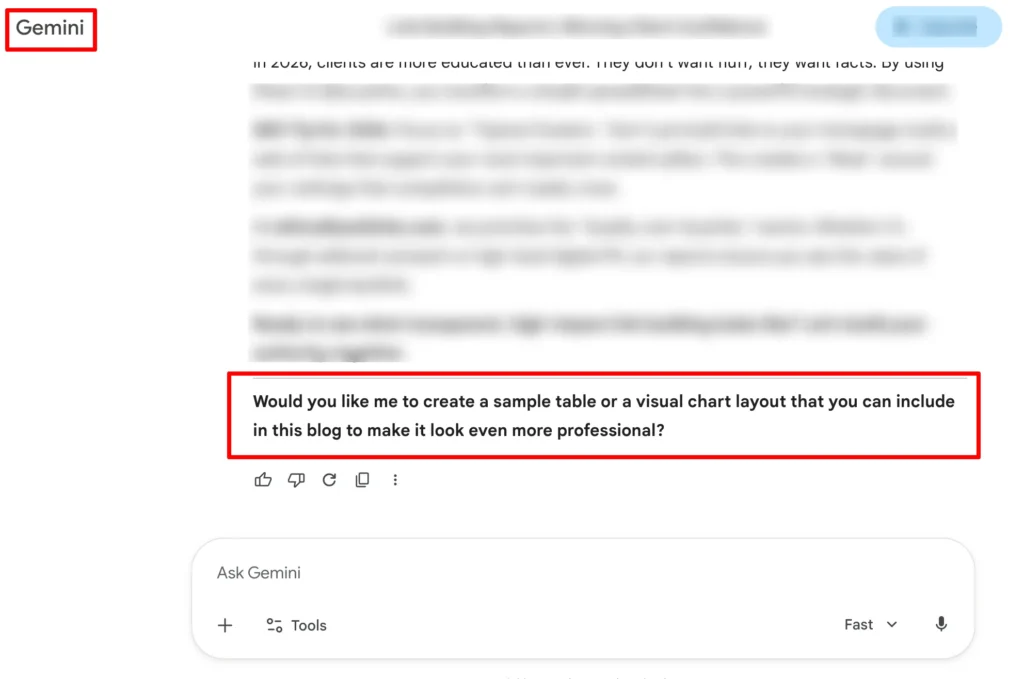
    Suggested follow-up queries

    By structuring your sub-headers as questions (e.g., How much does a backlink cost in 2026?), you are essentially creating “hooks” for the AI to grab.

    Expert Tip: Use Entity-based SEO to define the relationship between your topic and related concepts. If you are writing about backlinks, make sure you mention referring domains, link equity, and anchor text distribution within the same paragraph to build “Topical Authority.”

    The Role of Semantic Density

    AI models don’t just look for your primary keyword, they look for a “cloud” of related terms that prove you are an expert. This is called Semantic Density.

    For this blog, we aren’t just talking about “AI search”, we’re discussing Generative Engine Optimization (GEO) and SGE visibility. These synonyms tell the AI that your content is deep, not just a surface-level overview.

    5 Content Red Flags That Prevent AI from Citing Your Site

    Even if you have the best information, Google’s SGE might ignore you if your page triggers certain “trust alarms.”

    To succeed in Beyond Blue Links, you must avoid these common pitfalls:
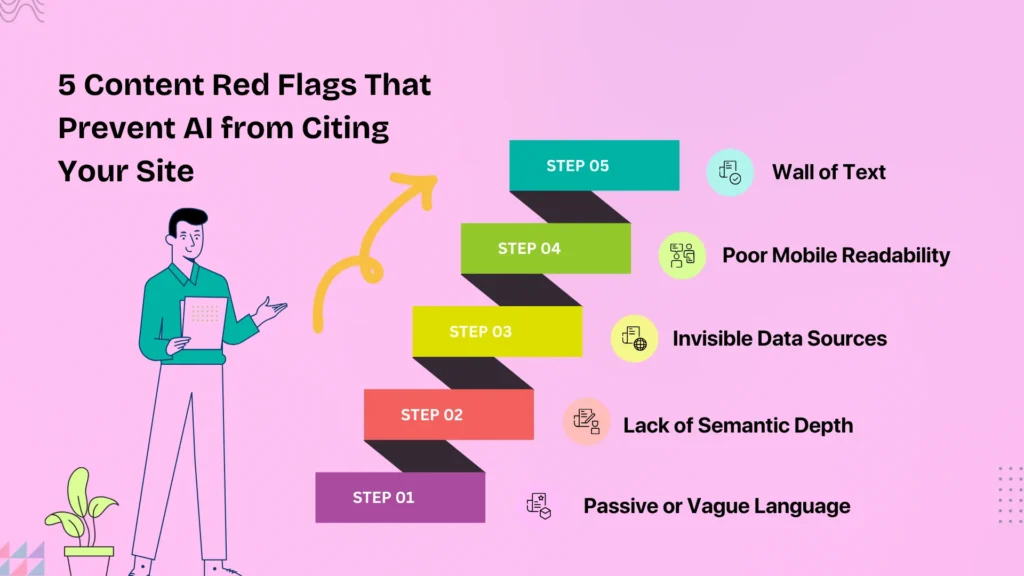
    Content issues that stop AI from citing your website
    1. Passive or Vague Language: AI models prioritize certainty. If you use phrases like “It might be possible that…” or “Some people say…”, the AI perceives a lack of authority. Use active, declarative sentences.
    2. Lack of Semantic Depth (Thin Content): If your post only touches the surface, it won’t be recognized as a “topical authority.” You need LSI keywords (Latent Semantic Indexing) to show you understand the whole ecosystem.
    3. Invisible Data Sources: If you state a fact but don’t link to a reputable source, Google’s AI (which is trained on fact-checking) may flag your content as unreliable.
    4. Poor Mobile Readability: SGE is heavily used on mobile. If your site has intrusive pop-ups or layout shifts (CLS), the crawler may deprioritize your content for the AI Overview.
    5. Wall of Text: AI likes structured data. If you don’t use bullet points, tables, and short paragraphs, the AI cannot “extract” the answer easily.

    How Backlinks Still Fuel AI Trust Signals

    This is the part many SEOs get wrong. They think because AI generates the answer, the “link” is dead. They couldn’t be more wrong.

    In 2026, Ethical or Relevant Backlinks are the “Verified Citations” that tell Google’s AI which websites are safe to trust.
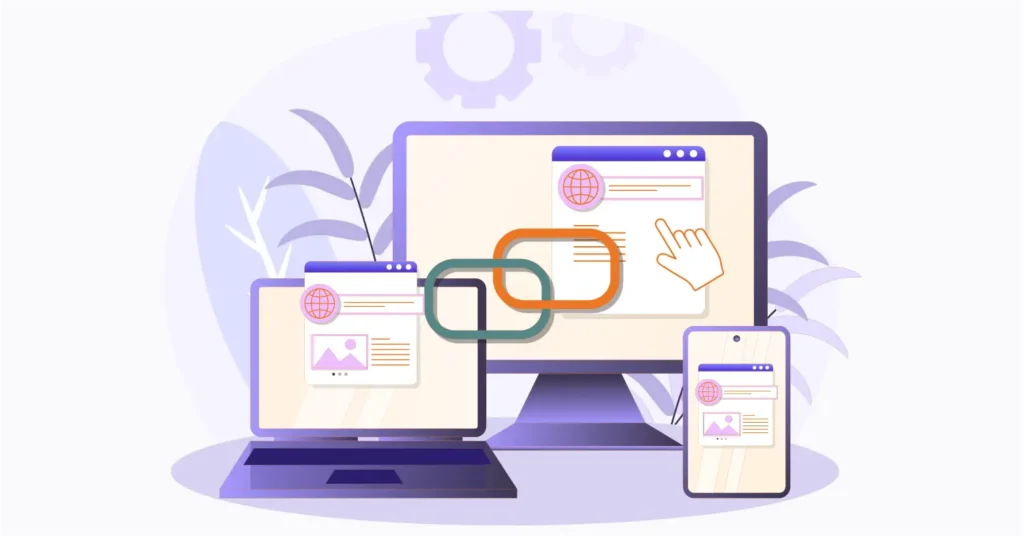
    Role of backlinks in building AI trust signals and authority

    Think of it this way: Google is putting its own reputation on the line when it cites a source. It won’t cite a site that has no “votes of confidence” from other authorities.

    The “Relationship” Between Links and SGE

    Google uses Entity-based SEO to connect your site to specific topics.

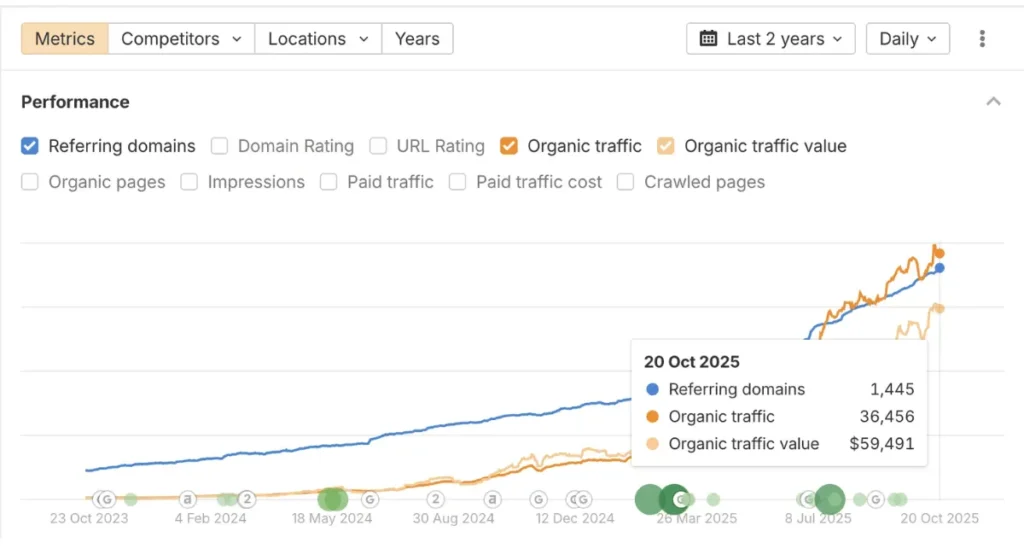
    According to data from SEMrush, there is a strong correlation between the number of high-authority referring domains and a site’s likelihood of being featured in an AI Overview.
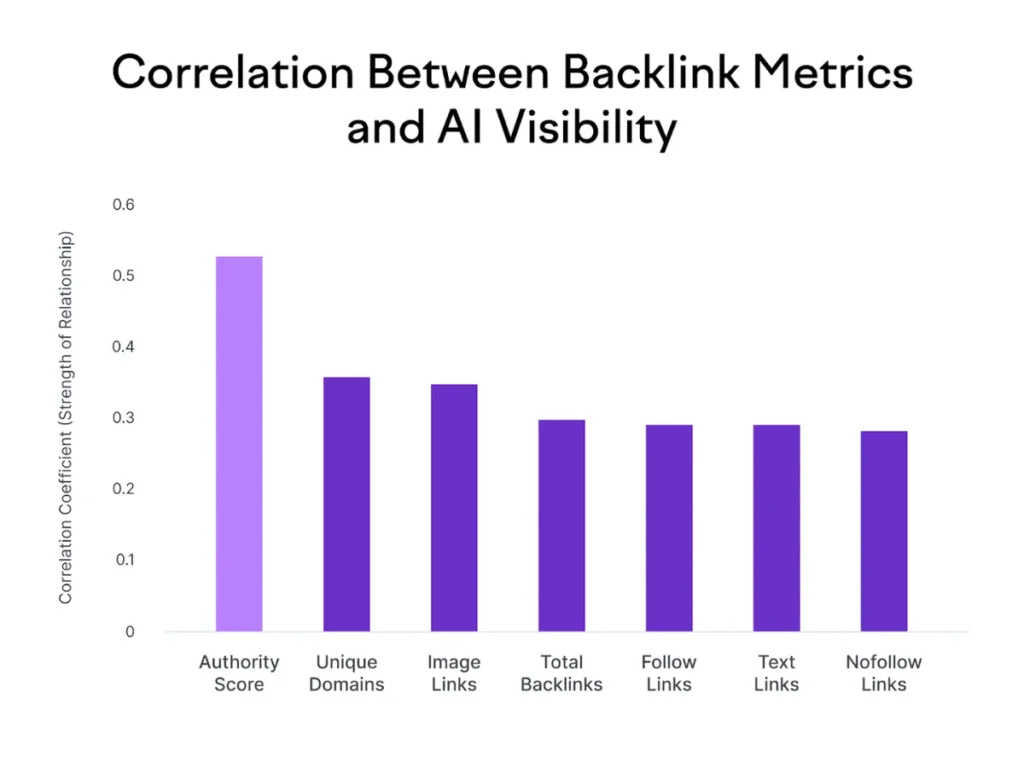
    Relationship b/w Backlinks and AI search visibility

    Tips for Ethical Link Building in the AI Era:

    • Quality over Quantity: One link from a niche-specific authority (like a Law Review or a Finance Journal) is worth more than 100 generic links.
    • Contextual Relevance: The anchor text should be natural and provide “semantic context” to the AI.
    • Diversity of Sources: A healthy link profile shows the AI that you are respected across different parts of the web.

    The Benefits: Why Being “AI-Cited” Matters for Your Brand

    Moving beyond the technicalities, let’s talk about the business growth aspect. Why are we doing this?

    1. Shortened Sales Cycle: When a customer asks a question and Google answers using your brand as the source, the trust is built instantly. You don’t have to “sell” as hard.
    2. Voice Search Domination: Over 50% of adults now use voice search daily (Forbes 2025). AI Overviews are the primary source for these voice answers.
    3. Brand Longevity: Sites that focus on being “Answers” rather than just “Results” are much more resilient to algorithm updates.

    Conclusion

    The transition from a directory of links to an engine of answers is the most significant shift in the history of the internet.

    While it may seem daunting that organic CTR has declined in some sectors, the opportunity for those who adapt is even greater. Moving Beyond Blue Links means evolving from a website that merely ranks to a brand that Google cites as a definitive authority.

    Success in 2026 requires a “Human-First, AI-Ready” approach. By prioritizing direct, “snippable” answers, implementing granular Schema, and building ethical backlinks that serve as trust signals, you ensure your expertise remains at the forefront of the search experience.

    The goal is no longer just to be found, but to be the trusted source that guides your audience through the noise. As search becomes more conversational and entity-based, your brand’s reputation is your strongest SEO asset.

    It’s time to stop just “ranking” and start being the answer the world is looking for. Stay agile, stay data-backed, and continue to prioritize quality over shortcuts to lead the conversation in 2026.

    Google AI cites the brands it trusts. Is your brand one of them? Build the ethical backlinks you need to earn AI citations—Contact Ethical Backlinks today!

  • Link Building Reports That Win Client Confidence

    Link Building Reports That Win Client Confidence

    In the high-stakes world of digital marketing, results are the only currency that matters. However, even the best results can go unnoticed if they aren’t communicated effectively.

    As we move through 2026, the gap between a “good agency” and a “trusted partner” is defined by the quality of their reporting.

    At ethicalbacklinks.com, we believe that transparency isn’t just a buzzword; it’s the foundation of every high-DR link we secure.

    A report shouldn’t just be a list of URLs. It should be a narrative of growth, showing exactly how your investment translates into authority and revenue.

    Why Link Building Reporting is Important?

    Reporting is the bridge between technical SEO actions and business outcomes.

    Without a clear report, a client sees a “cost,” but with a structured report, they see an “asset.”

    • Trust and Transparency: Clients need to know that the links are “ethical” and not coming from link farms or PBNs.
    • Strategic Alignment: It ensures both the agency and the client are targeting the right pages and keywords.
    • ROI Justification: Link building is a long-term game. Reports highlight the incremental wins (like ranking jumps or traffic spikes) that prove the strategy is working before the final revenue goals are hit.

    “The goal is to turn data into information, and information into insight.” — Carly Fiorina

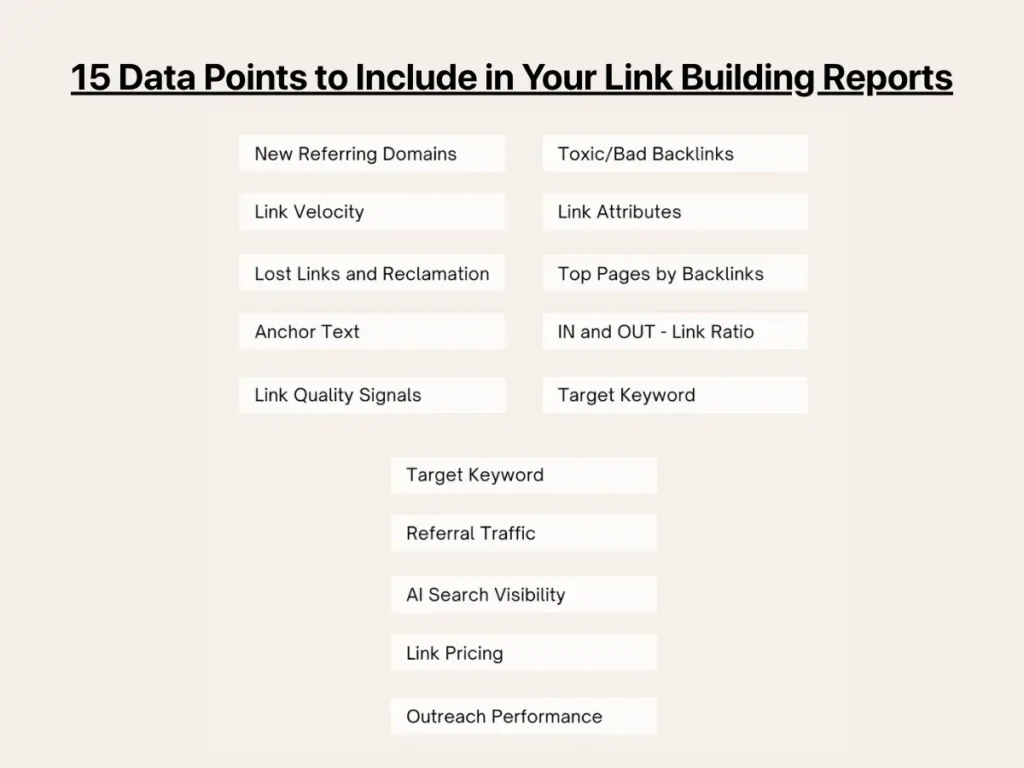
    15 Data Points to Include in Your Link Building Reports

    To win client confidence in 2026, your reports must be comprehensive.

    Here are the 15 essential data points categorized into Acquisition, Outcomes, and Operations.

    Link Building Reports

    Link acquisition and backlink profile report

    This section proves the “health” of the link-building campaign. It shows that you are building a natural, powerful, and sustainable footprint.

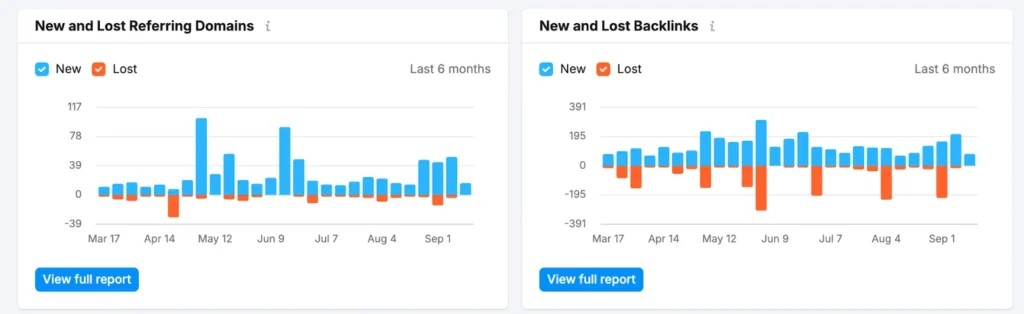
    1. Number of new referring domains and backlinks

    It’s not just about the volume of links; it’s about diversity.

    A report should distinguish between the total number of links and the number of unique domains.

    Referring Domains

    If you get 10 links from the same website, it doesn’t carry the same weight as 10 links from 10 different high-authority sites.

    In 2026, Google’s algorithms are smarter at spotting “site-wide” links, so showing a high number of unique referring domains proves a healthy, natural reach.

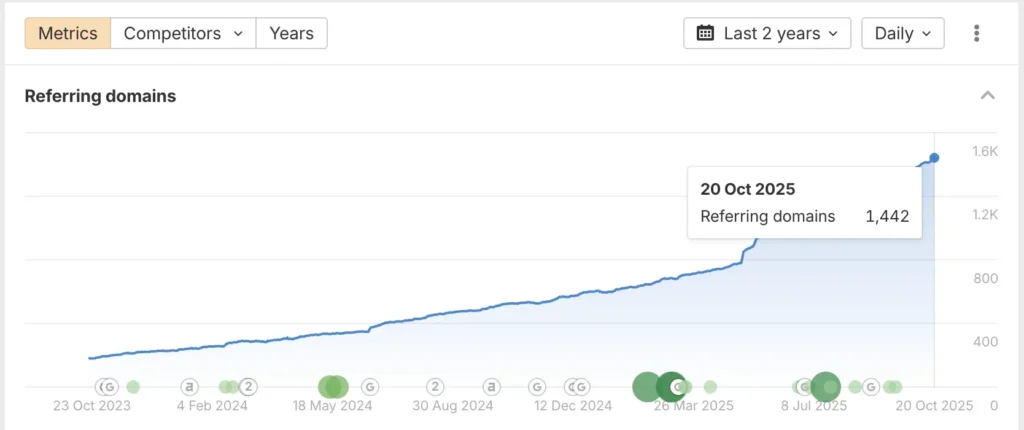
    2. Link velocity

    Link velocity is the speed at which your site gains new backlinks over time.

    If a site suddenly gains 500 links in a week after months of silence, it triggers a “spam” alert for search engines.

    Link velocity

    A professional report shows a steady, upward graph. This “natural growth” indicates to Google that your content is being shared and cited organically by the community, rather than being manipulated by bulk bot-buying.

    3. Lost links and reclamation efforts

    The internet is dynamic, pages get deleted, and webmasters change their content.

    Reporting on lost links shows that you are actively monitoring the client’s backlink health. Instead of just showing “new” links, you should show which links dropped off and what you did to fix it.

    🏆 Winning Tip: At Ethicalbacklinks.com, we believe in reclamation, reaching out to site owners to restore broken links or replacing them with a new placement to maintain the site’s authority.

    4. Anchor texts

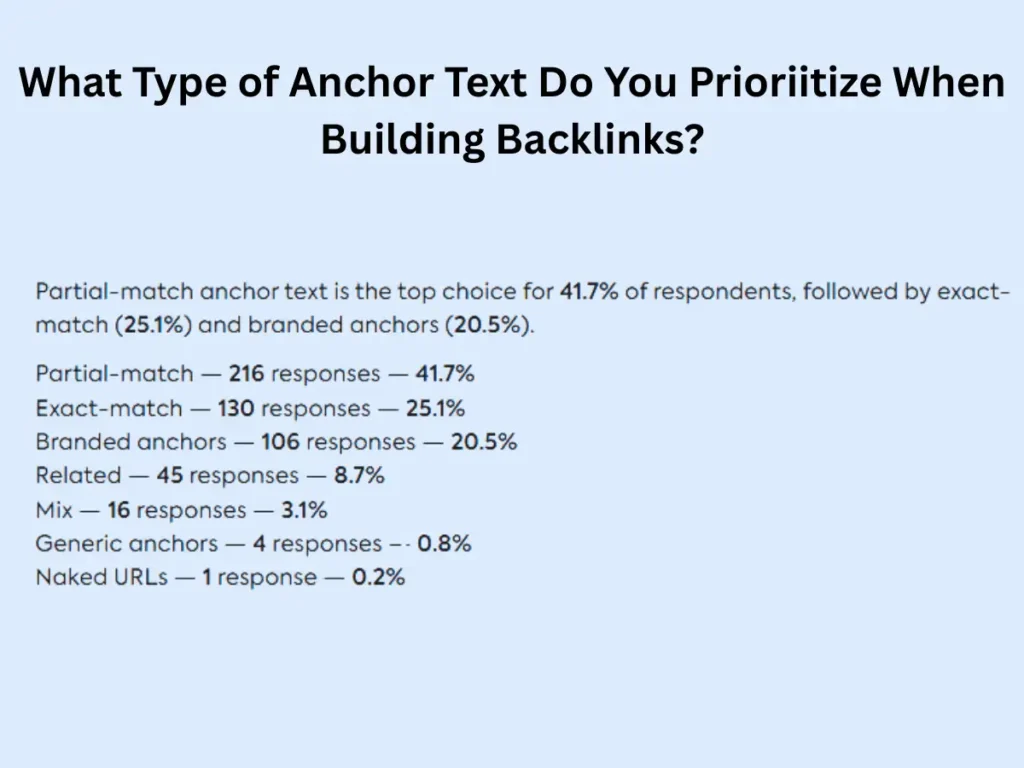
    Anchor text is the clickable word or phrase used to link to your site.

    If every single link uses the keyword “best lawyer,” Google will flag it as over-optimization.

    breakdown of anchor text

    A detailed report must show a breakdown: Branded (your company name), Naked URLs (www.yoursite.com), and Target Keywords.

    A natural 2026 profile usually consists of 50-60% branded anchors to keep the site safe from “Manual Action” penalties.

    5. Link quality signals

    Not all links are created equal.

    You must define the “authority” metrics for every link secured.

    This includes Domain Rating (DR) from Ahrefs or Domain Authority (DA) from Moz.

    More importantly, show the Monthly Organic Traffic of the linking site.

    A link from a DR 70 site that gets zero traffic is likely a “dead” site. A link from a site with real, active readers is the gold standard for SEO.

    6. Toxic/Bad backlinks

    Negative SEO is a real threat where competitors or spam bots link to your site from “adult” or “gambling” sites.

    Including a section on toxic links proves you are acting as a digital bodyguard.

    By identifying these “spammy” signals early, you can advise the client on whether to ignore them (as Google often does now) or use the Disavow tool if a manual threat is detected.

    7. Link attributes

    Link Attributes

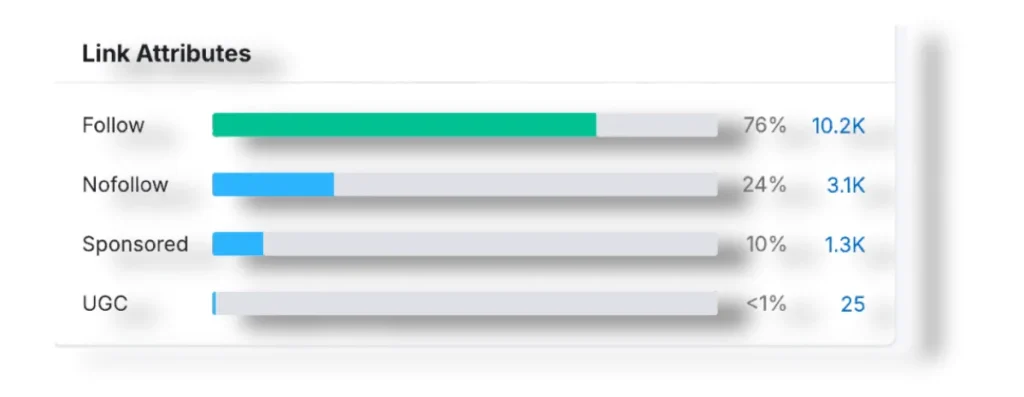
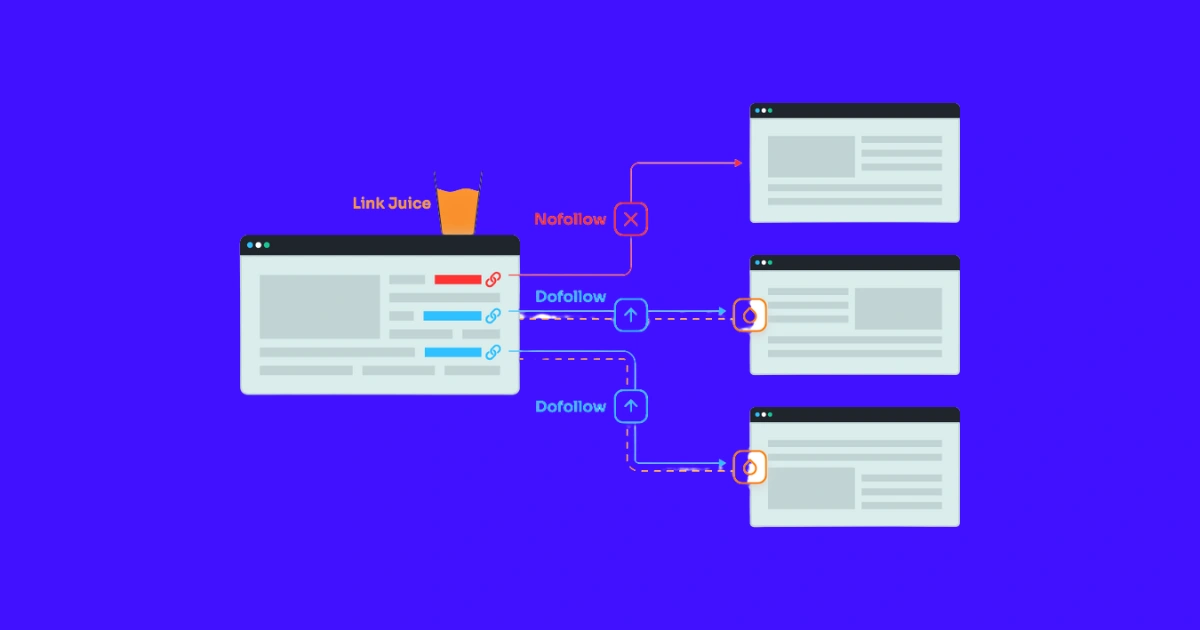
    Every link comes with a “tag” like Dofollow, Nofollow, UGC, or Sponsored.

    While Dofollow links pass the actual “SEO juice” that helps you rank, a profile with zero Nofollow links looks fake.

    Your report should show a healthy mix. Interestingly, in 2026, search engines and AI models use Nofollow links as “hints” for brand authority, so they still hold significant value for your overall digital footprint.

    8. Top pages by backlinks

    Which specific pages on your site are “earning” the most links?

    This data point helps you understand if your link-building strategy is too lopsided.

    For example, if 90% of links go to the Homepage, your “Service” or “Product” pages might struggle to rank.

    A good report highlights the “Link Equity” distribution, ensuring that your most profitable pages are getting the authority they need to move to Page 1.

    9. Inbound vs. outbound link ratio

    This metric looks at the quality of the sites that are linking to you.

    If a website links out to 5,000 other sites (Outbound) but only has 50 sites linking to it (Inbound), it is likely a “Link Farm.”

    We ensure that the sites we choose for our clients have a healthy ratio, meaning they are respected authorities that are selective about who they link to.

    Outcomes Report

    This is where the “magic” happens. This section connects the links to the client’s bottom line.

    10. Target keyword and page rankings

    This is the most direct proof of success. The report should show a table of your target keywords and their movement.

    For instance, showing a keyword moving from Position #45 to Position #12 after a 3-month link-building campaign is a “win” that every client understands.

    It provides visual evidence that the “authority” you are building is actually moving the needle in search results.

    11. Organic traffic

    Links are the fuel, and organic traffic is the vehicle. Using data from Google Analytics 4 (GA4) and other third party tools like Ahrefs, you should demonstrate a correlation between the links built and the increase in monthly visitors.

    Monthly Organic Traffic

    When a client sees that their “Organic Sessions” have increased by 25% since the campaign started, the cost of link building becomes an investment with a clear return.

    12. Referral traffic from backlinks

    A high-quality link on a relevant site does more than just help SEO; it brings actual customers.

    If we place a guest post on a major industry blog, we track how many people clicked that link and landed on your site.

    This “referral traffic” is often highly qualified and leads to higher conversion rates, proving that the link is placed in front of a real, engaged audience.

    13. AI search visibility

    New for 2026: With the rise of AI search engines like ChatGPT, Perplexity, and Google’s AI Overviews, traditional ranking isn’t enough.

    AI search visibility

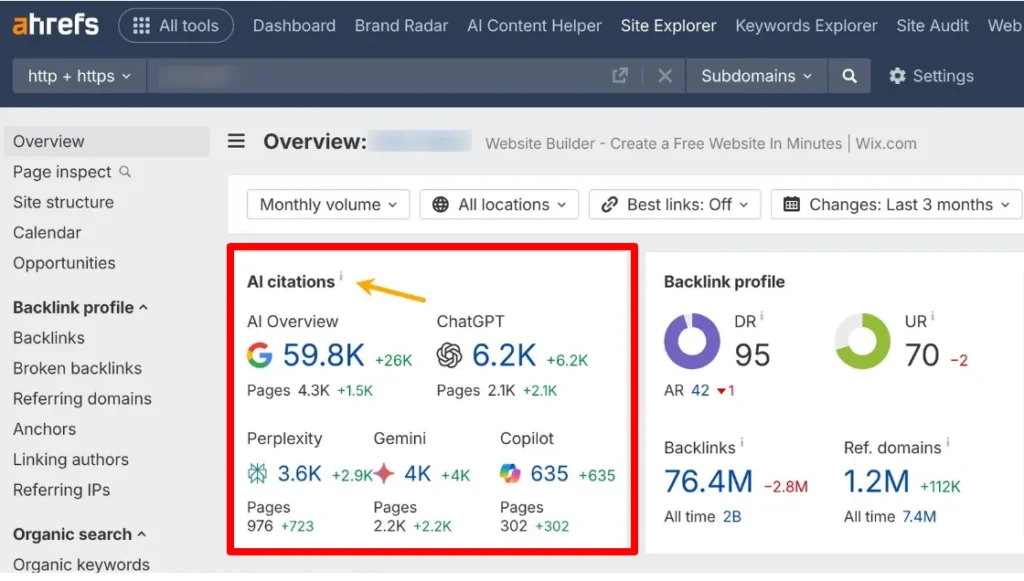
    We now track whether your brand is being “cited” as a source by AI.

    These AI models rely on high-authority backlinks to decide which companies to recommend. Showing a screenshot of an AI answer citing your website as an expert source is a huge “confidence win” for modern clients.

    Operations and Finance Report

    Transparency in how the budget is spent is what keeps clients renewing their contracts.

    14. Link pricing and budget transparency

    No one likes hidden costs. A professional report breaks down the budget clearly. Whether you charge per link or a flat retainer, show the value.

    For example: “Budget: $5,000 | 10 Premium Links Secured | Avg. DR: 65.” Breaking down the costs for content creation, outreach, and placement fees builds a level of trust that “black-box” agencies can never match.

    15. Pipeline and outreach performance

    Link building is 90% perspiration and 10% publication.

    Show the client the “hustle.” Mention how many sites were contacted (e.g., “Reached out to 150 editors”), the response rate, and the links currently in the “Pipeline” (negotiation phase).

    This explains why some links take time and proves that your team is working hard behind the scenes to secure only the best placements.

    Create Clear Link-Building Reports to Demonstrate ROI to Clients

    In 2026, clients are more educated than ever. They don’t want fluff; they want facts. By using these 15 data points, you transform a simple spreadsheet into a powerful strategic document.

    SEO Tip for 2026: Focus on “Topical Clusters” Don’t just build links to your homepage; build a web of links that support your most important content pillars. This creates a “Moat” around your rankings that competitors can’t easily cross.

    At ethicalbacklinks.com, we prioritize the “Quality over Quantity” mantra. Whether it’s through editorial outreach or high-level digital PR, our reports ensure you see the value of every single backlink.

    Ready to see what transparent, high-impact link building looks like? Let’s build your authority together.

    Would you like me to create a sample table or a visual chart layout that you can include in this blog to make it look even more professional?

  • How to Use AI for SEO: Proven Tactics From SEO Experts

    How to Use AI for SEO: Proven Tactics From SEO Experts

    The SEO landscape is shifting faster than ever. With the rise of generative search and smarter algorithms, manual optimization alone is no longer enough to stay competitive.

    To keep up, smart marketers are turning to Artificial Intelligence to work faster, smarter, and more efficiently.

    At Ethical Backlinks, we believe in using technology to enhance human expertise—not replace it.

    In this guide, we’ll dive into 11 proven tactics from SEO experts on how to use AI for SEO to scale your results while maintaining the high quality search engines demand.

    How to use AI for SEO

    How to use AI for SEO

    Using AI for SEO isn’t about clicking a “generate” button and walking away.

    It’s about leveraging Large Language Models (LLMs) and specialized SEO tools to handle data-heavy tasks, brainstorm ideas, and refine technical elements.

    Here are 11 ways you can start using AI to transform your search performance today:

    1. Competitor research

    AI allows you to perform deep-dive competitor analysis in seconds rather than hours.

    By feeding AI tools data from your competitors’ top-performing pages, you can instantly identify:

    • Content gaps: Topics they cover that you don’t.
    • Tone of voice: How they speak to their audience.
    • Winning strategies: Summaries of why their top pages are ranking (e.g., better data, more comprehensive FAQs, or unique insights).

    2. Keyword research

    Beyond just finding high-volume terms, AI helps you understand search intent. You can use AI to cluster keywords by topic or persona.

    For example, you can prompt an AI to find long-tail keywords specifically for “small business owners looking for budget SEO” versus “enterprise marketing directors.”

    This level of granular targeting makes your keyword strategy far more effective.

    To learn more about Keyword Research, click here Keyword Research: Find Keywords to Rank Higher on Google

    3. SEO content outlines

    Writer’s block is a thing of the past. AI is exceptional at building comprehensive content outlines.

    By analyzing the top 10 results on Google for a specific query, AI can suggest the H2s and H3s you need to include to ensure your content is “semantically complete.”

    4. Meta tag ideas

    What are Meta Tags

    Writing unique title tags and meta descriptions for hundreds of pages is tedious.

    AI tools like ChatGPT or specialized plugins can generate dozens of creative, click-worthy meta tag options based on your target keyword and page content.

    This ensures every page on your site is optimized for Click-Through Rate (CTR).

    5. Image creation

    Unique visuals are a ranking factor. Instead of using overused stock photos, you can use AI tools like Midjourney, DALL-E, or Canva’s Magic Media to create custom graphics, charts, and illustrations.

    These unique assets are more likely to be picked up by Google Images and shared by other sites (potentially earning you those all-important backlinks).

    6. Image alt text

    Accessibility is crucial for SEO. AI vision models can now “see” an image and write descriptive, keyword-rich alt text automatically.

    This improves your site’s accessibility for visually impaired users and helps search engines understand what your visual content is about.

    7. Schema markup generation

    Structured data (Schema) helps search engines display your content as “rich snippets” (like stars, prices, or FAQ dropdowns).

    Writing JSON-LD code manually is difficult for non-developers. You can simply ask an AI to “Generate FAQ schema for these three questions” and paste the code directly into your site.

    8. Internal linking ideas

    What are internal links

    Internal links help Google crawl your site and distribute “link juice.”

    By providing an AI with a list of your URLs and their topics, it can suggest relevant places to link from old posts to new ones.

    This improves your site architecture and keeps users on your site longer.

    9. Data analysis

    SEO involves a lot of spreadsheets. You can upload your Google Search Console or Google Analytics data into an AI model to identify trends that might be invisible to the naked eye.

    Ask questions like, “Which pages had the biggest drop in traffic last month?” or “Find the correlation between word count and average position.

    10. Project specs

    Clear communication is key to SEO success. AI can help you draft “Project Specs” for developers or “Content Briefs” for freelancers.

    By clearly defining the technical requirements or editorial standards, you reduce errors and ensure your SEO projects are executed perfectly the first time.

    11. Page experience analysis

    Google prioritizes websites that offer a great user experience. Tools like Microsoft Clarity now use AI to generate heatmaps and “session summaries.”

    This allows you to see exactly where users are getting frustrated or clicking away, giving you a roadmap for improving your Core Web Vitals and conversion rates.

    FAQs about AI SEO

    What is AI SEO?

    AI SEO is the practice of using artificial intelligence and machine learning tools (like ChatGPT, Claude, or Ahrefs) to automate and optimize traditional SEO tasks like keyword research, technical audits, and content planning.

    Why is using AI for SEO important?

    AI allows SEOs to work at a much higher scale. It handles the repetitive, data-heavy tasks, allowing human experts to focus on high-level strategy and creative storytelling.

    In a competitive market, AI is the “force multiplier” that keeps you ahead.

    Does AI content work for SEO?

    Yes, but with a major caveat. Google’s guidelines state that content should be “helpful, reliable, and people-first.” Content that is 100% AI-generated without human oversight often feels robotic and may be flagged as spam.

    The best approach is AI-assisted content—using AI for ideas and outlines, but human expertise for the final draft.

    How can I use AI for SEO?

    You can start by using AI to:

    • Generate topic ideas.
    • Analyze competitor backlinks.
    • Write technical code (like Schema or Robot.txt).
    • Categorize large lists of keywords.

    When should I use AI for SEO?

    Use AI when you need to save time on repeatable tasks or when you need to analyze large sets of data. However, you should never use AI without a final human review.

    Always fact-check AI-generated information, as “hallucinations” (false information) can hurt your brand’s authority.

    What are some AI SEO tools to use?

    • ChatGPT / Claude / Gemini: General purpose AI for writing and analysis.
    • Ahrefs / SEMrush: For AI-powered keyword and backlink data.
    • Surfer SEO / Clearscope: For content optimization.
    • Canva: For AI image generation.
    • Midjourney: For high-end custom visuals.

    Get started with AI SEO optimizations

    The future of search is AI-driven, but the fundamentals of SEO are quality, authority, and trust – remain the same.

    By integrating these 11 tactics into your workflow, you can build a more efficient, data-backed SEO strategy that wins in 2025 and beyond.

    Ready to boost your site’s authority? At Ethical Backlinks, we combine cutting-edge technology with ethical link-building strategies to help your site rank higher. Contact us today to learn how we can help you grow your organic footprint.

  • Leading Link Building Agencies for SaaS Growth

    Leading Link Building Agencies for SaaS Growth

    The future of link building is not about mass outreach; it’s about genuine relationships and earning trust.”Rand Fishkin, Founder of SparkToro

    You can’t buy authority. You have to earn it with every link you get.”Adapted SEO wisdom

    Finding the right link building partner can be the single most impactful decision for your SaaS SEO strategy.

    High-quality, relevant backlinks are the backbone of search engine authority, helping your site rank higher, drive organic traffic, and build brand credibility.

    This detailed guide reviews the top agencies known for delivering verifiable, ethical, and superior results.

    Top 10 Link Building Agencies Right Now

    Here are ten specialized agencies known for delivering high-quality backlinks that significantly improve rankings and organic traffic for SaaS companies.

    1. Ethical Backlinks

    Ethical Backlinks

    EthicalBacklinks is a dedicated white-hat link-building agency focused on securing high-quality, relevant, and natural backlinks that significantly boost SEO performance for SaaS and B2B clients.

    We emphasize a transparent, results-driven approach to enhance domain authority and organic traffic.

    Key Services

    • White-hat link-building
    • Contextual link insertions
    • Broken link building
    • Competitor backlink analysis
    • Digital PR outreach

    Notable clients

    We work with fast-growing SaaS startups and established B2B brands, helping them improve their organic search presence and accelerate growth.

    Nexus Link Agency, White Label Digital Marketing Agency, WP WebInfo Tech, The Startup INC

    Case study with results

    • Prospeo: Achieved a 632% increase in organic traffic and a 52 point increase in Domain Rating within 8 months.
    • Modash: Successfully secured 100 high-quality, niche-relevant, contextual backlinks within just 4-5 months, significantly boosting their authority and organic presence.

    Pricing

    EthicalBacklinks offers flexible, pay-per-link models and custom packages tailored to specific client needs. Our services are designed to be affordable for startups while delivering premium, high-authority links, with pricing starting from $150 per link.

    2. Quoleady

    Quoleady

    Quoleady is an SEO agency specializing in content marketing and link building. They prioritize natural, editorial links from real authoritative websites, ensuring long-term SEO value with a tailored approach for SaaS brands.

    Key services

    • SaaS link building
    • SaaS content strategy and writing
    • SEO audit and content guidance
    • SaaS consulting
    • Digital PR (including placements on Forbes and Entrepreneur)

    Notable clients

    Expandi, Pandadoc, Monday.com, and airfocus.

    Case study with results

    • Expandi: Helped scale the company from 0 to $8M Annual Recurring Revenue (ARR) using a strong content and link building strategy.
    • RingBlaze: Drove 50,000 website visits and 650 leads with only 20 articles.
    • FullSession: Generated 500 leads in four months with 16 well-optimized articles.
    • ResponseScribe: Took them from 0 to over 4,500 monthly visits in just six months.

    Client testimonials

    Quoleady features several client testimonials highlighting their expertise in driving measurable business growth.

    Pricing

    Quoleady offers flexible, custom pricing based on the number and quality of links required. Their services start at $250 per link, with final pricing varying depending on the target site’s authority and relevance.

    3. Editorial.Link

    editorial.link

    Editorial.Link is a specialized agency focusing on earning high-impact editorial placements and listicle mentions inside existing, ranking content. Their white-hat strategies are designed for sustainable SEO growth.

    Key services

    • Editorial backlinks inside ranking content
    • White-label link building for agencies
    • Listicles mentions optimized for visibility in AI search results

    Notable clients

    NordVPN, PandaDoc, DiscoverCars, and DepositPhotos.

    Results

    • PandaDoc: Boosted organic visibility by 212% with targeted backlinks from high-authority business sites.
    • Intellectsoft: Achieved a 197% increase in organic traffic through strategic editorial link placements.

    Pricing

    Editorial.Link offers simple, pay-per-link pricing starting at $1,750 for 5 links, or $6,000 for a package of 20 links, with custom plans for larger requirements.

    4. Rock The Rankings

    Rock The Rankings

    Rock the Rankings is a SaaS content marketing agency specializing in fully managed link building campaigns. They prioritize niche-relevant, high-quality backlinks that significantly improve search rankings and drive tangible business results.

    Key services

    • Guest posting and editorial links
    • HARO (Help a Reporter Out) outreach
    • SaaS content marketing
    • Competitor link gap analysis

    Notable clients

    Bizzabo and Toast POS.

    Results

    • Bizzabo: Achieved a $150,000 increase in Organic Traffic Value and a 3x increase in Marketing Qualified Leads (MQLs).
    • Toast POS: Added $300,000+ in Monthly Organic Traffic Value.

    Pricing

    Rock the Rankings provides custom pricing based on the client’s specific SEO goals and the number/quality of links required. A free consultation is available to receive a tailored quote.

    5. Blue Things

    Blue Things

    Blue Things is a SaaS-focused link building agency known for its content-driven approach. They focus on securing backlinks from reputable, industry-specific sources through custom outreach campaigns.

    Key services

    • Guest posting and editorial links
    • Content-led link building
    • Custom outreach campaigns
    • Competitor backlink analysis

    Notable clients

    Meridian Compensation Partners, Axify, and Hurom.

    Results

    • Axify: Improved their overall SEO performance by 175% with strategic link building and blog content.
    • Hurom: Achieved an 88% boost in organic visibility and search rankings.

    Pricing

    Blue Things offers custom pricing tailored to link building needs, emphasizing securing high-quality, niche-specific backlinks for long-term SEO benefits.

    6. Digital Olympus

    Digital Olympus

    Digital Olympus is a full-service SEO and digital marketing agency that employs a data-driven, white-hat approach to link building. They focus on tailored strategies that align with a client’s overall SEO and content marketing strategies.

    Key services

    • Guest posting
    • Digital PR, Content marketing
    • Link reclamation
    • Competitor backlink analysis

    Notable clients

    Credo, G2, and Pitchbox.

    Results

    • Ramp: Increased organic traffic to 70K monthly visits by securing 54 new links.
    • SwagDrop: Improved search rankings to achieve 21K organic traffic and acquired 232 valuable backlinks.
    • Discover Car Hire: Achieved 127K organic traffic in SEO visibility by focusing on content-driven link building and acquiring 192 new links.

    Pricing

    Digital Olympus utilizes custom pricing depending on factors such as the average Domain Rating (DR) of target sites, the number of links/guest posts needed, and the duration of the engagement.

    7. uSERP

    uSERP

    uSERP is a premium SaaS link building agency focused on securing high-authority editorial backlinks. They leverage Digital PR and content-driven strategies to work with fast-growing and enterprise-level SaaS brands.

    Key services

    • Editorial backlinks from high-quality websites
    • Digital PR & HARO outreach for media placements
    • Guest posting
    • Competitor analysis

    Notable clients

    Freshworks, Monday.com, and ActiveCampaign.

    Results

    • Preply: Helped the website rank #1 for alternative keywords with 58,000 monthly searches.
    • Monday.com: Achieved a 77% rank improvement for over 23,000 new organic keywords.

    Pricing

    uSERP operates on a high-end, premium model. Plans range from a Startup plan (starting at $10,000/month) up to the Authority plan ($30,000/month).

    8. Growfusely

    Growfusely

    Growfusely is a content-driven SaaS SEO agency that uses strategic content marketing and outreach to build high-quality, white-hat backlinks, focusing on improving Domain Authority (DA) and organic traffic.

    Key services

    • Guest posting
    • HARO & PR outreach
    • Content-led link building
    • Competitor backlink analysis

    Notable clients

    Shopify, Semrush, and Sunsama.

    Results

    • Mind the Graph: Increased its organic traffic by 217% within 6 months through content marketing and SEO.
    • Whatfix: Built 250+ high-quality links from authoritative publications in their niche.

    Pricing

    Growfusely provides custom pricing tailored to the SaaS company’s long-term SEO goals, prioritizing link quality and relevance over volume.

    9. Skale

    skale

    Skale is a SaaS growth marketing agency known for securing contextual, scalable, and white-hat backlinks. Their strategies are revenue-driven, focusing on links that boost search rankings and overall signups.

    Key services

    • Guest posting on quality domains
    • Digital PR & HARO outreach
    • Content creation for SaaS marketing
    • Competitor link analysis

    Notable clients

    Happy Scribe and Piktochart.

    Results

    • Happy Scribe: Helped them reach over 70,000 organic signups using revenue-driven link building services.
    • Piktochart: Increased their signups by 10X within 3 months of implementation.

    Pricing

    Skale offers custom pricing based on specific SEO and growth objectives. Their focus is on securing authoritative, niche-relevant links that ensure long-term SEO benefits.

    10. LinkyJuice

    Linky Juice

    LinkyJuice is a SaaS-focused agency that emphasizes white-hat, editorial link building. Their approach is designed to ensure every backlink is authoritative, relevant, and contributes to sustained SEO growth.

    Key services

    • Guest posting on quality domains
    • HARO outreach
    • Niche edits
    • Competitor link building.

    Notable clients

    They do not publicly list their clients in their portfolio.

    Results

    • AI-powered writing tool client: Improved organic search rankings, leading to 24,000 organic keywords and an increase in Domain Rating (DR) to 19.
    • Social media ads tool client: Increased organic keywords in the SERP from 10 to 208, boosted traffic from 1K to 19K, and grew DR from 43 to 61 in three months.

    Pricing

    LinkyJuice offers custom pricing based on the required number and quality level of backlinks.

    How the best SaaS link building agencies compare

    The top SaaS link building agencies generally fall into two categories:

    1. Premium, Strategy-First Agencies (e.g., uSERP, Skale, Rock the Rankings): These require a high monthly retainer ($10K+) but offer a fully managed solution that integrates link building into a wider, customized SEO and content strategy. They prioritize tangible business outcomes (ARR, MQLs) over simple link counts.
    2. Flexible, Link-Focused Agencies (e.g., EthicalBacklinks Quoleady, Editorial.Link): These offer pay-per-link models or smaller packages, making them more accessible for startups or agencies needing specific link types (like editorial insertions or high-DR guest posts). EthicalBacklinks, with pricing starting at $150/link, represents a strong flexible option.

    Ultimately, the best choice depends on the size of your budget and whether you need a fully integrated service or a purely link-focused solution.

    Choosing the right SaaS link building agency

    Selecting an agency is a partnership decision that should align with your business goals and marketing maturity.

    Choosing the right SaaS Link Building Agency

    1. Understanding your marketing needs

    Before engaging an agency, determine your core objective:

    Are you aiming for Domain Authority (DA) increase, generating high-value leads, or defending your top rankings?

    An agency specializing in Digital PR (like Editorial.Link) is better for authority, while one focused on content-to-conversion (like EthicalBacklinks) is better for lead generation.

    2. Evaluating an agency’s content, SEO, and link building expertise

    A truly effective agency will not just outreach but they will analyze your content gaps, audit your existing backlink profile, and offer strategic advice.

    Ask for live case studies, not just aggregated stats, to understand their actual link acquisition process.

    3. Transparency and reporting in link building efforts

    A reliable agency will offer:

    • Regular progress updates and transparent insights into their outreach methods.
    • Detailed reports on the links built, including the Domain Rating, traffic metrics, and relevance of the target websites.
    • Willingness to adjust their link building strategy based on your feedback and current SEO landscape.

    Transparency is non-negotiable for ensuring you receive high-quality, white-hat links that secure long-term SEO success.

    Final Summary

    Investing in SaaS link building is a crucial, long-term move that boosts your search rankings, drives organic traffic, and builds brand credibility.

    The best agency will do more than just secure quality backlinks; they’ll also offer transparent reporting and a strategy perfectly tailored to your business goals.

    If you need a reliable partner to secure high-authority links for your SaaS company, consider EthicalBacklinks. We have a proven track record with fast-growing SaaS brands and offer flexible, affordable pricing to help you strengthen your SEO and grow your business.

    Ready to start getting links that deliver real results?

    Book your 1-on-1 SaaS Marketing Strategy Call today.

  • Link Juice: Everything You Need to Know in 2026

    Link Juice: Everything You Need to Know in 2026

    Link building in 2026 is less about quantity and more about E-E-A-T (Experience, Expertise, Authoritativeness, and Trustworthiness).

    The concept of Link Juice, the transfer of authority from one page to another via a hyperlink remains central, but its mechanics are more complex and nuanced than ever before.

    This is your definitive guide to earning, managing, and maximizing this vital SEO commodity.

    Highlights

    • Link Juice is the colloquial term for Link Equity, the SEO value passed through a hyperlink.
    • In 2026, search engines primarily see links as relevance and discovery signals, not just numerical votes.
    • The Pillar and Cluster content model is the most effective way to manage and compound internal link juice.
    • Ethical, editorial-style acquisition (Digital PR, linkable assets) is the only sustainable strategy.
    • Google now treats rel="nofollow" as a hint, meaning it may sometimes pass value, though it’s not guaranteed.

    What Link Juice means in 2026?

    What is Link Juice?

    Link Juice (or Link Equity) is the measure of trust, authority, and relevance that a link passes from a source page to a destination page. Think of it as a current of power flowing through the web.

    IIn 2026, Google’s understanding of the context and quality of the connecting pages heavily filters this power flow.

    Links as discovery and relevance signals

    Google’s sophisticated algorithms are less concerned with a simple PageRank score and more focused on topical authority.

    Links are now vital signals for:

    • Discovery: Helping crawlers find new or updated content.
    • Relevance: Affirming that your page is a valuable, authoritative source on a specific topic. The closer the thematic fit between the source and destination, the stronger the signal.

    A link should exist because it genuinely provides value to the user and is a natural, editorial inclusion. Any link built solely to manipulate search rankings is a link at risk.

    The mechanics of link equity today

    How do search engines calculate and distribute link juice?

    The process is a combination of on-page factors, link attributes, and technical configuration.

    i) Anchor text and on-page context

    The anchor text (the visible, clickable tex) is crucial. It provides Google and users with a clear summary of what the destination page is about.

    • Best Practice: Aim for varied, descriptive, and natural anchors (e.g., “learn about ethical backlink strategies”) over forced, exact-match anchors (e.g., “ethical backlink building”).
    • Context is King: A link placed editorially within the main body of a highly relevant article passes significantly more equity than a link in a sidebar, footer, or author bio.

    ii) Internal links and website structure

    Internal links are the only link juice mechanic you have 100% control over. A strong internal link structure ensures:

    • Crawlability: Google can easily navigate and find all your important pages.
    • Distribution: You can strategically direct authority from your strongest pages (like your homepage or pillar content) to your newest or most commercially important pages.

    iii) Link attributes (nofollow, sponsored, ugc)

    The rel attribute is a hint to Google on how to treat an outbound link.

    • rel="nofollow": Tells Google not to pass the source page’s authority. However, Google has treated this as a hint since 2019, meaning it may sometimes choose to count it. Use this for links you don’t want to endorse or for non-editorial content.
    • rel="sponsored": You must use this attribute for links that are part of advertising, paid placements, or other compensation agreements.
    • rel="ugc": You should use this attribute for links within user-generated content, like comments or forum posts.

    iv) Redirects, 404s, and chains

    • 301 Redirects: Pass most of the link equity (the vast majority). While they are essential for site maintenance (e.g., changing a URL), we always prefer linking directly to the final URL over creating long redirect chains.
    • 404 Errors: Pages not found are a complete link equity black hole. A 404 page loses any link juice pointing to it.
    • Redirect Chains: A series of multiple redirects (e.g., Page A $\rightarrow$ Page B $\rightarrow$ Page C) should be avoided as they can slightly dilute equity and slow down crawling.

    What actually affects how much link juice you get

    How much link juice you get

    The value of link juice is not static. It depends entirely on the source of the link.

    i) Referring domains’ quality and topical fit

    This is the most critical factor. A high-value link is characterized by:

    1. High E-E-A-T: The linking site demonstrates real-world expertise, authority, and trustworthiness in its niche.
    2. Topical Relevance: The linking page is about the same or a closely related subject matter as your destination page.

      A link from a finance site about “mortgage rates” is worth more than a link from a gardening blog about the same topic.
    3. Content Quality: The linking page itself is high-quality, up-to-date, and provides a good user experience.

    ii) Placement and context

    As noted, placement matters. A link that is:

    • Within the primary body of the article.
    • Early in the content (but still natural).
    • Surrounded by text that is highly relevant to the anchor. …will pass the maximum amount of equity. Links in sidebars, footers, or massive lists are significantly devalued.

    iii) Technical hygiene

    Your own site’s technical health ensures the received link juice can flow freely:

    • Crawl Budget: Ensure your site is easy to crawl.
    • Mobile-Friendliness: A prerequisite for high rankings.
    • Page Speed (Core Web Vitals): The user experience of your page impacts its ability to utilize its ranking signals, including link equity.

    iv) Global elements that leak equity

    Certain elements can dilute the link juice of a page:

    • Excessive Outbound Links: A page with hundreds of outbound links will pass less equity per link than a page with only a few.
    • Sitewide Links: Links that appear on every page (e.g., in a footer) are typically heavily devalued compared to a single editorial link.
    • No-indexed Pages: If a page is blocked from indexing, any link juice it receives or tries to pass will be trapped.

    How to build link juice ethically in 2026

    How to build link juice ethically?

    Ethical (or “White Hat”) link building is about earning links, not buying them.

    The focus is on creating content so valuable that other websites want to reference it.

    i) Linkable assets and evergreen linkable content

    Create content that is designed to be referenced and cited:

    • Original Research & Data: Proprietary industry surveys, benchmarks, or data studies that no one else has.
    • Definitive Guides: Comprehensive, long-form resources that become the ultimate source on a topic (like this guide).
    • Free Tools/Calculators: Interactive, useful assets that solve a real user problem.

    ii) Digital PR and editorial links

    This strategy is about marrying SEO with traditional public relations. It involves:

    • Creating a newsworthy story based on your data or expertise.
    • Pitching this story to journalists and editors at high-authority news sites and industry publications.
    • Earning a link as a natural, editorial citation within their article.

    iii) Guest articles and brand partnerships

    • Guest Posting: Write genuinely high-quality, unique content for relevant, authoritative sites in exchange for a link back to your site. The content must be excellent and the site must be highly curated.
    • Partnerships: Collaborate with complementary brands on co-branded research or content, resulting in mutual, high-quality links.

    iv) Link insertions with guardrails

    This involves finding existing, relevant articles and pitching your content as a valuable addition.

    • Strategy: Find an article that ranks well but is missing a key piece of information or an up-to-date statistic. Pitch your superior, linkable asset as a helpful resource for their readers.

    v) Broken links and link reclamation

    • Broken Link Building: Find relevant high-authority pages linking to a dead resource (404). Contact the site owner and suggest your superior, live content as a replacement.
    • Link Reclamation: Monitor the web for unlinked mentions of your brand name or proprietary research. Contact the publisher and politely ask them to turn the mention into a live hyperlink.

    Internal link juice you control

    internal link juice you control

    A strong internal linking strategy ensures efficient distribution of the external link juice you earn across your highest-value pages.

    i) Pillar and cluster model that compounds

    This is the gold standard for site structure.

    • Pillar Page: A comprehensive, broad-topic page targeting a high-volume keyword (e.g., “Link Juice Explained”). It links out to all the cluster pages.
    • Cluster Pages: More specific, deep-dive articles (e.g., “Best Link Reclamation Tactics,” “Nofollow vs. Dofollow in 2026”). Each cluster page links back to the Pillar page.

    This structure creates a clear, authoritative signal for the Pillar page and ensures that link juice flows freely and intentionally.

    ii) Internal linking checklist

    • Every new article should link to at least 2-3 relevant older articles and the main Pillar page.
    • All cluster pages should link back to their primary Pillar page.
    • Use rich, keyword-relevant anchor text for contextual links.
    • Audit your site for orphaned pages (pages with no internal links) and fix them immediately.

    iii) Common mistakes to fix fast

    • Over-linking: Avoid stuffing every sentence with internal links. Focus on high-value, contextual opportunities.
    • Generic Anchors: Don’t use anchors like “click here” or “read more.”
    • Linking to Irrelevant Pages: Only link to pages that genuinely add value to the user’s current reading experience.

    iv) Tools and reports

    Use tools like Google Search Console (GSC) to find and prioritize your most-linked-to pages. Use this list to identify where you can add new internal links pointing to pages that need a boost.

    What not to do with link juice

    Avoid any tactic that violates Google’s Spam Policies, as these methods carry a high risk of manual action or algorithmic penalty.

    i) PageRank sculpting

    This is an outdated concept. In the past, SEOs tried to use nofollow on internal links to “sculpt” or funnel authority to specific pages. Do not do this. It doesn’t work; any link equity that would have flowed through the blocked link is simply lost and doesn’t get redistributed.

    ii) Paid links and disclosure

    Buying or selling links that pass link juice is a direct violation of Google’s guidelines.

    • If you buy a link (or receive compensation for a link), it must use rel="sponsored" or rel="nofollow".
    • If you sell a link, it must use rel="sponsored" or rel="nofollow".

    iii) Site reputation abuse and scaled spam

    Google’s March 2025 updates brought a heightened focus on Site Reputation Abuse, where high-authority sites host low-quality, third-party content solely to pass link equity.

    • Avoid: Posting thin, outsourced, or low-value content to third-party domains just for a link.
    • Avoid: Generating scaled, automated content or using Private Blog Networks (PBNs). In 2026, these are easily detected by advanced AI and will lead to penalties.

    FAQs

    Q. Do rel=”nofollow” links pass link juice?

    A. Maybe, but not reliably. Since 2019, Google treats nofollow, sponsored, and ugc as hints, not directives.

    This means Google may choose to follow and count the link for ranking purposes, especially if it comes from a highly authoritative source.

    However, you should not rely on them for direct link equity transfer; they are primarily valuable for traffic, brand exposure, and maintaining a natural link profile.

    Q. Are social media links useful?

    A. Yes, but not for direct link juice. Social media links (from Twitter/X, LinkedIn, Facebook, etc.) are typically nofollow and do not pass link equity.

    However, they are invaluable for discovery, driving traffic, and acting as a co-citation signal that can contribute to your E-E-A-T.

    Q. Should I use the rel=”nofollow” attribute on internal links?

    A. No. This is an outdated tactic (PageRank sculpting) and will only cause you to lose link equity and make your site less crawlable. Let your internal links pass full equity.

    Q. Does WordPress setup matter for equity?

    A. Yes. Your theme and plugins can affect link juice by creating unnecessary nofollow links in navigation, footers, or comments, or by creating bloat that harms site speed.

    Choose themes and plugins known for clean code and SEO hygiene.

    Q. What about link juice keeper or auto‑redirect plugins?

    A. Avoid them. These tools often rely on complex, non-standard redirects or deceptive cloaking methods that are either ineffective or actively violate Google’s guidelines.

    For essential redirects, stick to standard 301 redirects managed at the server or high-quality plugin level.

    Conclusion

    In 2026, Link Juice is not a metric to be gamed but it is a fundamental pillar of a healthy, authoritative website.

    Success hinges on a two-pronged strategy: earning high-quality, editorial links from relevant, trustworthy domains and managing that authority effectively through a clean, logical internal link structure.

    By prioritizing user value, E-E-A-T, and ethical practices, you won’t just rank, yet you’ll establish your site as a genuine authority in your niche.

  • Testimonial Link Building: An Underrated Tactic

    Testimonial Link Building: An Underrated Tactic

    Link building is a fundamental pillar of any successful SEO strategy, but the methods for acquiring backlinks are constantly evolving.

    While tactics like guest posting and broken link building are popular, one of the most effective and often overlooked strategies is testimonial link building.

    This approach involves providing genuine, positive feedback to a company about their product or service in exchange for a backlink to your website when they publish your testimonial.

    It’s a win-win situation: they get valuable social proof to attract new customers, and you gain a high-quality backlink, often from a homepage, that boosts your own site’s authority.

    Benefits of Testimonial Link Building

    Benefits of Testimonial Link Building

    Testimonial link building offers several distinct advantages over other link acquisition methods.

    • You don’t need to create long-form content. Unlike guest posting, which requires you to write a lengthy article, a testimonial is typically just a short paragraph, making it much quicker and less expensive to produce.
    • You are less likely to be rejected. Businesses actively seek positive feedback from their users to showcase on their websites. Because you are providing them with something they genuinely want, your outreach is more likely to be successful compared to other methods like broken link building.
    • It boosts your credibility. When your testimonial is featured on a reputable website, you and your business gain credibility by association. This can also position you as an expert in your field.
    • It can lead to direct traffic and new leads. Your testimonial, particularly if it’s placed on a prominent page like a homepage, can be seen by potential customers who might click through to your website.
    • It strengthens business relationships. Providing a testimonial can deepen your relationship with the company, potentially leading to future collaborations and networking opportunities.

    How to Build Testimonials Backlinks?

    How to Build Testimonials Backlinks?

    Getting a backlink through a testimonial is a straightforward process that can be broken down into six key steps.

    1. Find relevant services or products to review

    Start by identifying the products and services you genuinely use and appreciate in your niche.

    A simple way to begin is by listing all the tools, platforms, or services that help you run your business day-to-day.

    It’s crucial that you can genuinely vouch for the product.

    2. Qualify the prospects

    Once you have a list, you need to vet each potential company.

    Check if they are relevant to your niche and if their website already features testimonials.

    You should also check their domain authority and traffic to ensure the backlink will provide significant value.

    3. Find the right person to contact

    Finding the right contact person is essential for a successful pitch.

    Look for marketing managers, brand managers, or customer success representatives.

    This ensures your email reaches someone who can make a decision and saves you from wasting time.

    4. Create a perfect pitch

    Your outreach email should be concise and to the point.

    Start by introducing yourself and your business, then briefly share your positive experience with their product or service.

    Finally, offer to write a testimonial they can feature on their site.

    This shows them the value you are providing upfront.

    5. Write a compelling testimonial

    A great testimonial goes beyond simple praise like “It’s great!” To be effective, your testimonial should:

    • Highlight a problem you faced that the product or service helped you solve.
    • Mention key features that were instrumental in solving that problem.
    • Share the results you achieved using the product, using specific data or metrics if possible.

    This detailed approach makes your testimonial more credible and useful to their potential customers.

    6. Make sure your testimonial is published

    After sending your testimonial, follow up to confirm they received it.

    If they agree to publish it, they will usually ask for your name, company, and a link to your website to include.

    Make sure to monitor for a few weeks to ensure it gets published and that the link is live and correct.

    Testimonial Link Building Best Practices

    Testimonial Link Building Best Practices

    To maximize your results, keep these best practices in mind:

    • Go the extra mile with video testimonials: Video testimonials are often more engaging than written ones and can increase your chances of being featured in a prominent place on their website.
    • Turn your testimonial into a case study: This requires more effort, but a case study can provide more exposure and establish your authority even further.
    • Share your published testimonial on social media: When you share the company’s post or page featuring your testimonial, they are likely to reshare it, amplifying its reach and visibility.
    • Don’t forget third-party review sites: Writing reviews on platforms like G2, Clutch, or Trustpilot can sometimes lead to companies featuring your review on their own site, which can then lead to a backlink.

    Conclusion

    Testimonial link building is a powerful, yet often underutilized, strategy for acquiring high-quality backlinks.

    It is a mutually beneficial approach that is less time-consuming and has a higher success rate than many other methods.

    By being strategic in your outreach, crafting compelling and genuine testimonials, and following up, you can secure valuable links that boost your website’s authority and help you build meaningful relationships within your industry.

  • Manual Link Building: Is It Still Worth the Effort in SEO?

    Manual Link Building: Is It Still Worth the Effort in SEO?

    Is manual link building still a valid and effective tactic?

    For years, the debate has raged among SEO professionals and digital marketers: is the hands-on approach to link building still a valid and effective tactic?

    With Google’s continuous algorithm updates, it’s becoming increasingly evident that human-generated backlinks are precisely what the search engine giant values.

    Despite the proliferation of automated link-building tools, the consensus is that manual link building is here to stay, at least for the foreseeable future.

    What is Manual Link Building?

    What is Manual Link Building?

    While a multitude of search engine optimization (SEO) techniques exist today, link building remains a cornerstone for improving a website’s search engine rankings.

    In particular, a manual approach to link building is a powerful method for driving traffic and enhancing your brand’s authority.

    Simply put, manual link building is a collection of techniques executed by a person, not by an automated program.

    Some popular manual link-building techniques include:

    • Writing testimonials
    • Guest posting
    • Engaging with influencers
    • Relevant blog comments
    • High-quality press releases
    • Fostering authentic relationships

    The emphasis here is on quality over quantity. Instead of mass-sending link requests, the goal is to build them organically by prioritizing high-quality content over manipulative, spammy tactics.

    When executed correctly, this deliberate approach offers a predictable and scalable way to increase your referral traffic.

    This puts you in control. You have the final say on where your links are placed, how they are integrated, and who receives the credit.

    While this strategy demands more time and effort, it’s a worthwhile investment for achieving high rankings on search engine results pages (SERPs).

    It’s crucial to understand the difference between automated and manual link building so you can choose the right strategy for your website.

    Think of it as the difference between a robot building a house and a human master craftsman building one.

    What is Automated Link Building?

    What is Automated Link Building?

    Automated link building is a process where you use specialized software or bots to automatically create links to your website.

    You essentially give the tool a list of keywords or pages, and it does the rest.

    • Pros: It’s incredibly fast and requires very little effort. You can generate hundreds of links in a short amount of time.
    • Cons: The links are almost always low-quality, unnatural, and often come from irrelevant or spammy websites. You have zero control over where your links are placed. Because these links are a red flag for search engines, this method can easily lead to a Google Penalty, which will cause your website’s traffic and rankings to plummet.

    In short, while automated tools might seem tempting for their speed, they put your website at serious risk of being penalized. Manual link building is a safer, more sustainable strategy that builds a strong, trustworthy foundation for your site and leads to lasting results.

    Is Manual Link Building Still Worth the Effort?

    Is Manual Link Building Still Worth

    If your primary goal is to build backlinks as quickly as possible without concern for quality, automated link building might seem like the ideal choice.

    However, a manual penalty could completely negate all the hard work you’ve put into your website.

    This is why, despite being time-consuming, manual link building is a far more valuable and safer tactic for your link-building efforts.

    Automated software can also harm your company’s reputation, especially for a small business, as your link might be perceived as spam or appear on a questionable site.

    So, it’s safe to say that a hands-on approach is a much safer practice than the automated alternative.

    Furthermore, by cultivating relevant, high-quality links through manual methods, you are more likely to improve your search engine ranking.

    Finally, if you’re new to link building, automated methods are not the wisest choice. Manual link building should be your primary focus.

    If you’re aiming to build valuable links and drive referral traffic, manual link building is your best bet. It offers the greatest chance for your site to be discovered and rank high in SERPs, particularly for new websites.

    What Constitutes a Quality Link? 🤔

    Quality links are those that:

    • Are contextually relevant
    • Offer value to the user
    • Are hosted on reputable domains
    • Are integrated with natural anchor text
    • Blend seamlessly into the content

    Essential Manual Link Building Strategies

    Essential Manual Link Building Strategies

    Now that you’re convinced of the value, you’ll want to know how to get started.

    Here are a few key techniques to consider before you begin building links manually.

    1. Building Relationships

    The first step to acquiring good links is to connect with others.

    An organic way to receive high-quality links from credible sources is to first establish a relationship with them.

    Building relationships with authoritative websites and individuals in your niche can involve offering value, like social shares and comments, and staying top of mind by linking to their content when relevant.

    If you have something valuable to offer these connections, they may be more inclined to direct their audience to your website via a backlink. A reciprocal relationship often leads to mutual benefits.

    Our top advice is to always be polite and friendly and to avoid being pushy, especially if the channel isn’t willing to include your link.

    When we assisted Heer Law with their link building, we focused on building relationships to secure links from high-authority legal websites. Since legal opinions are highly valued by blogs and news sites, we secured several linked mentions for the law firm in various online publications.

    No matter your industry, fostering relationships can help you earn backlinks.

    2. Writing Testimonials

    Every business understands the power of positive public perception. Excellent reviews, especially on third-party websites with high domain authority, can significantly boost your reputation and establish you as an expert in your field.

    When potential customers see good reviews, they are more likely to trust and purchase from you. Reviews demonstrate your value and expertise.

    Most businesses would do anything for a five-star review. This is where you can add value and build relationships.

    This technique involves offering to write testimonials for other businesses’ products and services.

    If you’ve written a positive review for a company, you can then ask them to link to your website in return.

    This method is not only free but also a great way to expand your network and earn a backlink.

    Who knows, your contact might even reciprocate with a positive review for your business.

    3. Guest Blogging

    This is a time-intensive tactic, as it requires producing high-quality content, but it offers one of the highest long-term returns.

    Guest blogging is the practice of writing blog posts for other websites that accept external contributions. You can include links pointing back to your own website within this content.

    Not only is your blog post a highly relevant and contextual place for your link, but it also helps to position your brand as a thought leader or industry expert.

    Links from reputable websites, such as guest blogs, help you build trust with search engines.

    It’s a win-win: you build links for your business, while the guest blog site benefits from your valuable content.

    Top Tips for Guest Blogging 👈

    • Only select websites that are relevant to your niche.
    • Ensure the article is not a blatant sales pitch for your business; it must provide value to the reader.
    • The blog post must be exceptionally well-written. Consider seeking professional help if needed.

    4. Networking with Influencers

    In the age of social media, your brand cannot afford to ignore relationships with relevant influencers.

    Brands are building massive audiences by networking with influencers who are a good fit for their business.

    These influencers often charge businesses to include their backlinks on their websites and social media accounts.

    However, you may occasionally find influencers who are willing to include your link for free, usually in exchange for a perk you can offer.

    This could be a free product or service, or even branded merchandise.

    If you can network with influencers and provide them with something of value in exchange for a backlink, you have the opportunity to reach a massive audience.

    5. High-Quality Press Releases

    Often, press releases and other syndicated content are overloaded with keywords to the point of being unreadable.

    Brands sometimes use press releases as a vehicle for including multiple backlinks. This means anyone who publishes the release automatically has your link on their site.

    However, if you use press releases for their intended purpose—to announce something newsworthy—and avoid keyword stuffing, this can be a successful link-building technique.

    A word of caution: abusing this method is a fast way to get a Google Penalty. This is because the search engine can identify these links as unnatural, especially in spammy press releases.

    The purpose of a good press release is to help writers, journalists, influencers, and readers discover something new and important.

    Keeping your press release aligned with these goals should help you stay on Google’s good side.

    Final Thoughts on Manual Link Building

    Many people argue that with the rise of automated link-building software, a hands-on approach is no longer necessary.

    Also, because these techniques are time-consuming, many link builders prefer the automated route.

    However, manual link building is crucial for the long-term success of your website and is an essential part of any effective link-building strategy.

    We have helped hundreds of clients with their manual link-building efforts, including fostering relationships through outreach and guest blogging.

    If you’d like to partner with a reputable link-building agency that understands how to do manual link building correctly, visit our website to get in touch. We’d be happy to talk.

  • Link Building Campaign: The Advanced Guide

    Link Building Campaign: The Advanced Guide

    What is a Link-Building Campaign?

    A link-building campaign is a strategic, continuous effort to earn high-quality backlinks from other websites to your own.

    This process goes beyond simply acquiring links; it’s about building a web of trust and authority.

    Its main purpose is to signal to search engines that your site is a credible, valuable resource, which in turn helps to improve your search engine rankings and establishes you as a thought leader in your industry.

    A well-planned campaign involves research, content creation, and strategic outreach, all working together to increase your site’s visibility and credibility.

    What Are the Benefits of a Link-Building Campaign?

    Benefits of a Link-Building Campaign

    Running a link-building campaign isn’t just about collecting backlinks but it’s about building a strong foundation for long-term SEO success.

    When done strategically, it can elevate your website’s visibility, authority, and overall performance in ways that other tactics simply can’t.

    So, why should you invest time and resources into a link-building campaign? Here are the key benefits you can expect:

    i) Improved search engine rankings

    • Search engines like Google see backlinks as “votes of confidence.” When numerous reputable sites link to your content, it tells the search algorithm that your site is trustworthy and relevant. This helps your pages rank higher for important keywords, making you easier for potential customers to find.

    ii) Increased organic traffic

    • Higher rankings directly lead to more organic traffic. As your content moves up the search results page, it gets more clicks, bringing a steady stream of new visitors to your site who are actively searching for information related to your business.

    iii) Enhanced website authority and credibility

    • Acquiring links from well-respected, authoritative sites in your industry boosts your own site’s authority. This increased credibility makes your brand more trustworthy to both users and search engines, creating a powerful feedback loop for future growth.

    iv) Faster indexing by search engines

    • Links are like highways for search engine crawlers. When a new page on your site is linked to from an established one, crawlers can find and index your content more quickly, making it discoverable to users sooner.

    v) Higher referral traffic

    • Beyond search engines, backlinks also send direct traffic to your site. When a user clicks a link to your content on another website, they are a valuable referral visitor. This is an excellent way to gain new audiences and potential customers.

    vi) Long-term SEO benefits

    • Unlike paid ads, which stop working when you stop paying, a strong backlink profile provides lasting value. Once a link is earned, it continues to benefit your site for years to come, helping you maintain a competitive edge and a solid foundation for your SEO.

    vii) Increased brand visibility and recognition

    • When your content is featured and linked to by other sites, it exposes your brand to new audiences. This increased exposure builds brand awareness and positions you as a recognized and respected name in your industry.

    viii) Higher conversion rates and revenue growth

    • The combined effect of increased traffic, enhanced credibility, and greater visibility can lead to a significant rise in leads and conversions. A successful link-building campaign is an investment that directly contributes to your business’s revenue and growth.

    Core Steps to Develop a Successful Link-Building Campaign

    Building backlinks isn’t about luck. It’s about having a well-structured, step-by-step approach.

    To turn your link-building efforts into measurable results, you need a roadmap that covers everything from setting goals to tracking performance.

    Here are the 8 essential steps to building a successful link-building campaign:

    1. Goal-setting
    2. Research link-building opportunities
    3. Develop linkable assets
    4. Reachout to prospective partners
    5. Diversify your link sources
    6. Utilize social media and content promotion
    7. Building relationship for long-term link acquisition
    8. Monitor your progress

    Let’s understand one-by-one.

    1. Goal-setting

    clearly define your goals

    Every effective campaign starts with a clear objective. Instead of just saying “get more links,” define specific, measurable, achievable, relevant, and time-bound (SMART) goals.

    For example, aim to increase your website’s Domain Rating (DR) by 5 points in six months, or acquire 15 new backlinks from sites with a Domain Authority (DA) over 40.

    Your goals should be aligned with your overall business objectives, such as boosting product sales or growing your email list.

    2. Research link-building opportunities

    Link-building opportunities

    To find the best links, you need to understand your competitive landscape.

    Use professional SEO tools to analyze the backlink profiles of your top competitors. Identify their strongest links and look for “link gaps“—sites that link to your competitors but not to you.

    Additionally, search for popular blogs, industry directories, and news outlets in your niche that could be potential partners.

    3. Develop linkable assets

    Linkable Assets

    You can’t ask for links if you have nothing worth linking to. Create high-quality content that is so valuable, others will naturally want to share and cite it.

    • 1️⃣ In-depth blog posts and guides: Create “ultimate guides” on a topic. These are evergreen resources that answer every possible question a user might have, establishing your content as the go-to source.
    • 2️⃣ Original research and data-driven content: Conduct a unique survey or analyze a new dataset. Original findings are highly sought after by journalists and bloggers, who need reliable data to support their articles.
    • 3️⃣ Infographics and visual content: Complex data and information can be made easy to digest with a well-designed infographic. These are easy to share and embed on other sites.
    • 4️⃣ Expert roundups and interviews: Gather insights from several experts in your field. This not only creates valuable content but also encourages the featured experts to share the post with their own audiences, often linking back to you.
    • 5️⃣ Interactive tools and resources: A free tool, calculator, or quiz that solves a common problem can be a powerful asset. These tools provide ongoing value and are excellent link magnets.

    4. Reach out to prospective partners

    Reach out to prospective partners

    This is where you proactively seek out opportunities. The key is to be personal and add value.

    • 👉 Find the right contact person: Avoid generic email addresses. Look for the name of a content manager, editor, or author. You can often find this information on the site’s “About Us” or “Contact” pages, or by using tools to find an email address.
    • 👉 Craft a personalized outreach email: Your email should be brief, friendly, and to the point. Explain exactly why your content is a perfect fit for their audience and how it would provide value to their readers. Show that you have genuinely read their content and are not just sending a mass email.
    • 👉 Send follow-up emails: Don’t give up after one try. A polite, brief follow-up email a few days later can often get a response. Persistence is a key part of successful outreach.

    5. Diversify your link sources

    A strong backlink profile is not built on a single strategy.

    Use a variety of tactics like guest posting on relevant blogs, submitting to high-quality industry directories, and using the “broken link building” method, where you find broken links on other sites and suggest your content as a replacement.

    6. Utilize social media and content promotion

    promote your content on social media channels

    Once your content is published, promote it everywhere.

    Share it on your social media channels, mention it in your newsletter, and engage with others who might find it useful.

    While social links don’t directly impact SEO in the same way, they significantly increase your content’s visibility, making it more likely to be seen by editors and bloggers who might link to it.

    7. Build relationships for long-term link acquisition

    Build relationships for long-term link acquisition

    Think of link building as an ongoing networking effort.

    Engage with influencers and content creators in your niche on social media, comment on their blog posts, and share their work.

    By building a rapport, you can create a network of allies who are more likely to link to you in the future.

    8. Monitor your progress

    monitor your progress

    Your campaign isn’t over when the links are earned. Use SEO tools to regularly track your progress.

    • 👉 Track acquired backlinks: Keep a detailed log of every new backlink you earn, including the linking domain and its authority.
    • 👉 Measure the quality of your backlinks: Not all links are created equal. Focus on the quality of the linking domain, its relevance to your niche, and whether the link is “dofollow” or “nofollow.”
    • 👉 Analyze referral traffic from backlinks: See which links are sending the most traffic to your site and whether that traffic is converting. This will help you understand which types of link-building activities are the most valuable for your business.

    Let Us Build and Scale Your Link-Building Campaigns

    A carefully planned link-building campaign can transform your website’s SEO, boost visibility, and strengthen authority in your niche.

    With the right strategy, from setting measurable goals to creating link-worthy content and running targeted outreach. You can earn backlinks that not only improve rankings but also drive consistent traffic and long-term growth.

    At EthicalBacklinks.com, we focus on building 100% natural, high-quality backlinks through proven ethical methods. Our team ensures every campaign is designed to deliver sustainable results without shortcuts or risks.

    👉 Ready to grow your authority and traffic? Book a call with us today and see how a tailored link-building campaign can take your website to the next level.

  • Organic Link Building: A Guide to Creating High-Quality Backlinks

    Organic Link Building: A Guide to Creating High-Quality Backlinks

    In the past decade, the importance of organic link building has surged.

    Google and other search engines have made it clear that these natural links are the most powerful factor in improving a site’s search rankings.

    The old strategy of buying countless links from low-quality websites is now obsolete.

    Today, search engines want to see backlinks that were earned because a website owner genuinely believes your content is valuable to their readers.

    This shift, while positive, leads to some common questions for anyone trying to improve their site’s visibility:

    • What makes a link “organic”?
    • What does the process of organic link building involve?
    • What are the best ways to build organic links?

    This article will address these questions, guiding you on how to boost your website’s rankings and traffic by earning high-quality, organic backlinks.

    What is Organic Link Building?

    What is Organic Link Building?

    Organic link building, or natural link building, is the process of acquiring backlinks to your website without paying for them or engaging in unnatural schemes.

    It’s when other websites link to your content because they find it genuinely valuable, useful, or interesting for their own audience.

    Think of it like a genuine recommendation. If a popular blogger cites your research in their article, it signals to Google that your content is trustworthy and authoritative.

    This is the opposite of “black hat” methods, which often lead to Google penalties.

    💡 Variety: The Sign of Organic Backlinks

    A truly organic backlink profile is varied.

    It includes links from different types of websites’ blogs, news sites, educational resources, and more—and from different types of content, such as resource pages, articles, and reviews.

    This diversity signals to search engines that your links are not the result of a single, orchestrated campaign but rather a natural spread of recognition across the web.

    What Are the Benefits of Organic Link Building?

    The Benefits of Organic Link Building

    The benefits of building a strong backlink profile naturally are numerous and long-lasting.

    a. Improved SEO

    Backlinks are a core ranking factor for Google.

    The more high-quality, relevant, and natural backlinks you have, the higher your domain authority will be, which in turn leads to better rankings in the SERPs (Search Engine Results Pages).

    This ultimately drives more organic traffic to your site.

    b. Lower Cost

    While it requires an investment of time and effort, organic link building is generally more cost-effective than buying links.

    You’re building an asset—your content—that continues to attract links over time without ongoing financial transactions.

    As the team at PRPosting notes, organic links are “genuine support for your website” and are not “purchased or exchanged.”

    c. Better Brand Perception

    A natural backlink profile builds your brand’s reputation as a trustworthy and authoritative source in your industry.

    When others voluntarily link to you, it serves as a vote of confidence, enhancing your brand’s credibility and public perception.

    How to Build Organic Backlinks

    How to Build Organic Backlinks

    The foundation of any successful organic link building strategy is high-quality content.

    a. High-quality content

    Creating content that people genuinely want to link to is the most effective way to earn links. This means producing content that is unique, valuable, and comprehensive.

    b. How to come up with content ideas

    Your content must stand out in a crowded digital world. Here’s how you can find ideas that resonate:

    1. Come up with ideas:

    • Use keyword tools: Tools like Ahrefs, SEMrush, or Google’s Keyword Planner can help you identify topics with high search volume and low competition.
    • Use site explorer: Analyze your competitors’ top-performing content and backlink profiles to see what’s working for them. This can give you inspiration for creating even better, more comprehensive content on the same topics.

    2. Prioritize keywords:

    • Choose keywords that align with your business goals and audience needs. Focus on long-tail keywords that indicate a specific user intent.

    3. Create content:

    • Don’t just rehash what’s already out there. Add your unique perspective, original research, or data. As Blue Tree Digital advises, “People don’t link to content because it’s ‘good.’ They link to content that does one of these five things… [it] triggers the exact emotional and logical responses that compel people to share, cite, or reference your content.”

    4. Share your content:

    • A “publish and pray” strategy won’t cut it. Actively promote your content on social media, in forums, and via email newsletters.

    Free Tools and Apps

    free tools and apps for seo

    Several free tools can help you in your quest for organic link building:

    • Google Search Console: Check for crawl errors and see which pages are getting organic traffic.
    • MozBar or Ahrefs Toolbar: Analyze the Domain Authority (DA) or Domain Rating (DR) of websites to ensure you are targeting high-quality links.
    • AnswerThePublic: Find content ideas by visualizing common questions and phrases related to your keywords.

    Build Relationships

    Earning links is often about building genuine connections with people in your industry.

    The importance of outreach:

    • Connect with bloggers, journalists, and influencers on social media. Engage with their content and provide value before you ever ask for anything in return.
    • When you do pitch them, make sure it’s a personal, human-written message that explains why your content would be a great resource for their audience.

    PR Link Building

    This strategy involves using public relations tactics to earn links from high-authority news sites and publications.

    💡 Let journalists come to you:

    • Sign up for services like HARO (Help a Reporter Out). Journalists send out queries for expert sources on a variety of topics. By providing a helpful quote or an insightful perspective, you can earn a valuable backlink from a major media outlet.
    • As the team at Outreach Monks suggests, “Invest some time in conversing with your audience… this will not only raise the level of engagement but also increase visibility, which in turn will help in long-term link building.”

    Awards

    Creating an industry award can be a powerful way to earn backlinks.

    When you host an awards program, you can get links from all the nominees and winners who promote their recognition on their own websites.

    It’s a scalable and highly effective strategy for creating a natural backlink profile.

    Broken Link Building

    This is a classic and effective organic link building strategy. The process is simple:

    1. Find a broken link (a link that leads to a 404 error) on a high-authority website.
    2. Create your own content that is a suitable replacement for the broken page’s topic.
    3. Reach out to the website owner, notify them of the broken link, and suggest your content as a replacement.

    Need Help Building Organic Backlinks? Get Expert Support

    Organic link building builds a strong backlink profile that boosts rankings, traffic, and brand authority.

    But it takes time, effort, and expertise from spotting opportunities to creating quality content and building real relationships.

    At EthicalBacklinks.com, we specialize in delivering 100% natural, long-lasting backlinks through ethical strategies that search engines trust.

    👉 Want to see results? Book a call today and let’s grow your website with high-quality organic links.

  • White Label Link Building Services for SEO Agencies

    White Label Link Building Services for SEO Agencies

    As an SEO agency manager, you have two options: use in-house resources to build links for your clients or hire a link-building agency offering white-label services.

    In the article, you will learn how white label link building services work and why you should consider them.

    Let’s dive right in!

    What is White Label Link Building Services?

    White label link building services help agencies deliver high‑quality, safe backlinks under their own brand—without hiring a full in‑house outreach team.

    “Generally speaking, the more high‑quality websites that link to you, the more likely you are to rank well.” — Paddy Moogan

    What Are White Label Link Building Services?

    What Are White Label Link Building Services?

    White label link building services are outsourcing arrangements where a specialist vendor runs research, outreach, and placement to earn backlinks for your client, but everything ships under your agency’s brand (emails, reports, and invoices can be white‑labeled).

    The aim is simple: acquire relevant, authoritative links that move rankings while protecting brand reputation.

    Typical deliverables

    • Link strategy mapped to keywords and pages
    • Prospect lists with topical + authority filters
    • Writer briefs or editorial content
    • Outreach, negotiation, and placement
    • QA on anchor text, context, and link attributes
    • Transparent reports with live URLs and metrics

    Why Agencies Use White Label Link Building Services

    SEO agencies often face a tough balance i.e., meeting growing client demands while keeping operations lean and efficient.

    That’s where white label link building services come in.

    Why Agencies Use White Label Link Building Services

    By partnering with a EthicalBacklinks.com or any specialized provider, agencies can expand capacity, access expert outreach skills, and deliver stronger results without building everything in-house.

    Here’s why more agencies are choosing this model:

    • Capacity on demand: Scale link acquisition quickly during busy client campaigns without going through long hiring and training cycles.
    • Specialist skill: Vendors focus solely on outreach, negotiation, and editorial standards, bringing proven expertise to your agency.
    • Predictable cost: Fixed per-link or per-package pricing makes it easy to forecast expenses and protect profit margins.
    • Reduced risk: Experienced teams know how to avoid risky tactics like PBNs or link farms that can trigger Google penalties.
    • Faster results: Established relationships with publishers and editors help secure placements more quickly than starting from scratch.

    “The best way to sell something—don’t sell anything. Earn the awareness, respect, and trust of those who might buy.” — Rand Fishkin

    When it’s not a fit

    • You want full editorial control on every site and sentence.
    • You need instant rankings for ultra‑competitive terms (links are one part of the puzzle).

    How White Label Link Building Services Work

    How White Label Link Building Services Work

    A. Discovery & goal‑setting

    Clarify the ICP, topics, competitors, target pages, anchors, and constraints (budget, geos, niches to avoid).

    B. Prospecting & qualification

    Filter by topical relevance, language, traffic, brand safety, organic growth, and real editorial standards. Avoid obvious footprints (link farms, casino/crypto if off‑topic, AI‑spun content).

    C. Content planning

    Choose link types: editorial guest posts, digital PR, resource links, link reclamation, unlinked brand mentions, niche edits (contextual insertions)—only when the page is editorially relevant.

    D. Outreach

    Personalized emails from your brand (or a brand‑neutral domain). Offer unique data, quotes, or content angles. Track reply rates, accepts, and live links.

    E. Placement & QA

    Check: indexation, topical match, natural anchor, dofollow/nofollow mix, placement in body copy, and no sneaky disclosures like “sponsored link” if it’s an editorial placement.

    F. Reporting

    Deliver live URLs, DR/DA, traffic, anchors, target pages, link attributes, date placed, and notes. Include next steps.

    White Label Link Building Services vs. Link Resellers

    White Label Link Building Services vs. Link Resellers
    AspectWhite Label OutreachLink Resellers/Marketplaces
    How links are acquiredCustom prospecting + editorial collaborationPre‑negotiated placements on fixed sites
    RiskLower (editorial) if done rightHigher (footprints, paid link networks)
    UniquenessHigh—content and sites tailored to clientLow—many buyers share the same inventory
    CostUsually higher per linkLower upfront, higher long‑term risk
    LongevityStronger (fits topic, earns traffic)Prone to mass de-indexing or link rot

    “Link spam is the practice of creating links to or from a site primarily for the purpose of manipulating search rankings.” — Google Search Spam Policies

    Pricing Models for White Label Link Building Services

    • Per‑link (tiered by site quality): e.g., traffic and authority thresholds.
    • Retainer: fixed monthly output tied to KPIs (links, referring domains, traffic lifts).
    • Hybrid: baseline retainer + performance bonus for top‑tier wins (national media, .edu, data stories).

    What drives price?

    • Topical difficulty and competition
    • Editorial standards of the target sites
    • Original research or assets (surveys, data visuals)
    • Region and language

    How to Vet a Provider of White Label Link Building Services

    Must‑ask questions

    1. Sourcing: How do you prospect? Show sample lists and rejection reasons.
    2. Quality guardrails: What do you exclude (PBNs, seller lists, AI‑spam, sponsored link pages, parasite SEO)?
    3. Process: Walk me through your outreach sequences and reply handling.
    4. Content: Who writes? How is originality checked? Who approves?
    5. Reporting: What metrics and proofs do you supply? How fast do you replace dead links?
    6. Compliance: How do you align with Google’s spam policies and local disclosure laws?

    Red flags

    • Guaranteed DR/DA numbers with no topical vetting
    • “Any niche” promises and same‑day delivery
    • Private spreadsheets with hundreds of for‑sale sites
    • Thin “sponsored” pages that exist only to sell links

    Risks, Ethics & Policies: White Label Link Building Services in 2025

    Google’s 2024–2025 spam updates target scaled, unoriginal content and site reputation abuse (a.k.a. parasite SEO). Your provider should avoid exploits and focus on editorial value.

    “So stick a fork in it: guest blogging is done; it’s just gotten too spammy.” — Matt Cutts
    Takeaway: Low‑quality, link‑only guest posts are risky. High‑quality, audience‑first contributions can still work when they offer genuine value.

    Safe operating principles

    • Prioritize relevance, readership, and genuine editorial review.
    • Use transparent outreach with unique hooks (data, experts, examples).
    • Mix link types and attributes naturally; avoid over‑optimized anchors.
    • Never buy from obvious networks; avoid AI‑spam footprints.

    KPIs, Reporting & Timelines for White Label Link Building Services

    Core KPIs

    • Referring domains (new & net growth)
    • Topical relevance score of linking pages
    • Traffic from linking pages (not just DR/DA)
    • Ranking movement for target keywords
    • Assisted conversions and revenue

    Realistic timelines

    • Month 1: research, approvals, first placements go live
    • Months 2–3: compounding placements, early ranking lifts on long‑tail terms
    • Months 4–6: movement on competitive terms if on‑page and content also improve

    Reporting cadence: weekly link log + monthly impact summary.

    SOPs & Templates for White Label Link Building Services

    A. Prospecting checklist

    • ✓ Page indexed and ranking for its own keywords
    • ✓ Topical match to target page
    • ✓ Real bylines, About/Contact pages
    • ✓ Organic traffic trend (not just DR/DA)
    • ✓ No obvious paid links or casino/crypto spam unless relevant

    B. Anchor‑text policy

    • 60–70% branded/URL/soft anchors
    • 20–30% partial‑match/semantic anchors
    • <10% exact‑match (use sparingly)

    C. Outreach angle ideas

    • Proprietary mini‑data: quick survey, internal benchmarks
    • Expert quotes (your client’s SME) offered to editors
    • Complementary assets: calculators, templates, visuals

    D. QA before marking a link “done”

    • Live, indexed, placed in body copy
    • Contextually relevant paragraph
    • Natural anchor text and correct destination
    • No sneaky nofollow changes after the fact
    • Screenshot + archive link saved

    E. Reporting columns

    • Source URL | Target URL | Anchor | Date | Status | Link type | Traffic | Notes

    FAQs about White Label Link Building Services

    Q1. Are white label link building services safe?

    A. Yes, if the provider focuses on editorial links, relevance, and avoids obvious link schemes. Always check for alignment with Google’s spam policies.

    Q2. How fast can I expect results?

    A. Usually 2–3 months for early lifts on long‑tail keywords, and 4–6 months for noticeable movement on competitive terms.

    Q3. How are these services different from link resellers?

    A. Resellers sell pre‑arranged placements (riskier), while white label providers run custom outreach for unique, client‑relevant links.

    Q4. Can agencies brand reports as their own?

    A. Yes, reports, emails, and communication can all be white‑labeled to appear as though they came directly from your agency.

    Q5. What types of links are usually built?

    A. Guest posts, digital PR links, niche edits, resource links, unlinked mention reclamation, and high‑authority editorial placements.

    Conclusion

    In today’s competitive SEO landscape, scaling link building in-house isn’t always practical. That’s where White Label Link Building Services become the game-changer for agencies.

    They provide the expertise, scalability, and risk-free execution your clients deserve without draining your internal resources.

    At EthicalBacklinks.com, we don’t just build links. we build trust, authority, and long-term results. Our ethical approach ensures every backlink adds real value, helping your agency grow stronger client relationships and win in competitive markets.

    👉 Ready to scale your agency with confidence? Partner with EthicalBacklinks.com today and let us be the engine behind your client success.